
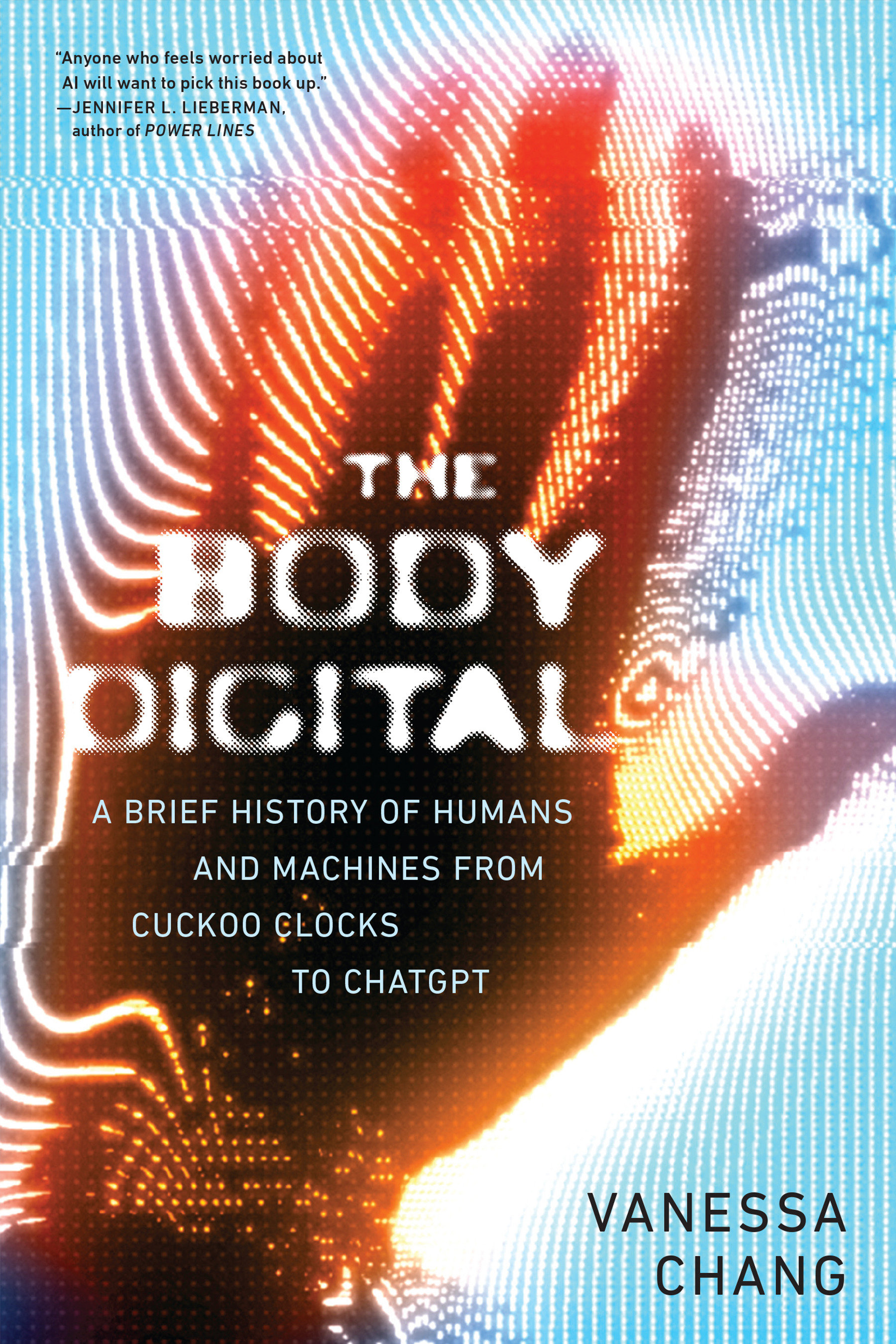
Part of my practice is to copy some of the sentences that really strike me when reading. I do this rather than taking notes, though sometimes I add a few notes as well.
I’ve chosen a few that are related to writing to share here today. That will give you some flavor of the book, though it’s only a small part of what Chang is doing.
It can be easy to forget that writing is an embodied technology.
There are three powerful thoughts in those few words.
First of all, it’s easy to forget these things about writing because we take it for granted. We don’t think about it much, unless we’re sitting down to do some of it. It’s a fact of life in our world.
Secondly, it’s embodied – we use our bodies to do it. Now right now I’m writing on a keyboard, which is my preferred way to write, but even that requires physical movement.
Writing by hand requires other kinds of movement, and dictation to produce written words a third kind. All of those are physical.
Chang goes on to say:
While much of writing’s profound impact lies in its massive capacity to store and transmit ideas, its ancestry in handmade marks makes it the twin of drawing.
I’ll get to the first part of that in a minute, but the idea that writing is much like drawing – which preceded it – amplifies the fact that it’s an act of our bodies. I keep thinking about Japanese and Chinese writing and particularly about how people do calligraphy with words in those languages, creating their own understanding of the word through the way they do the lines.
Much of the traditional poetry in those languages is also done as art. It’s a physical act – you could dance it, really – but it also stirs the mind, makes you think about ideas.
Technology is the third concept in that first sentence. Writing is a technology. The second quote – “its massive capacity to store and transmit ideas” – makes that clear.
Before writing, communication involving words (rather than pictures) was oral, and while memorization was cultivated in many cultures to preserve what they considered important, words were generally fleeting and – importantly – only shared in person.
Writing changed that. Obviously later technology has changed it even more, but think about the fact that you can read something written thousands of years ago. And of course we regularly read work by people we will never meet in person or hear speak, even if they are still around.
(As someone who is always discovering incredible people by reading their obituaries, I really appreciate it that some of them were writers so that I can at least get to know them through that.)
Writing is technology, a tool humans designed for themselves. And like all such tools, it was controversial at first and it changed the way humans did things.
As someone who reads and thinks about what I read and then comes up with ideas on my own, I can’t imagine not wanting this technology of writing. I always want to build on what I read or hear. That’s a lot harder to do when your first task might be just to remember it. Or at least it seems that way to me.
Chang goes on to say:
Writing unmoors language from that present and transforms consciousness; by reifying the word, written language allowed us to see our thoughts separated from ourselves.
(The dictionary says that to reify means to represent something abstract as something material or concrete. I had a vague notion of what it meant, but I looked it up because I suspected there was more to it than I was getting. That turned out to be correct.)
Our thoughts separated from ourselves. As a writer, that makes a lot of sense. All these ideas are always pounding in my head, and I write them down to figure out what they all are. Then they become something separate, though often they aren’t exactly right.
(All the writers I know bemoan the fact that the story on the page is so often not as good as the vision of it in their mind before they start writing.)
Technologies like writing allow us to share thoughts and ideas as well as to clarify them for ourselves, but technologies are never a perfect conduit.
Here’s a final thought from Chang:
Writing has never been a solo act.
I’ll let you think about that one on your own.
As always, your blog provides food for thought. I have some scattered thoughts in response.
“Our thoughts separated from ourselves.”
In Robert Macfarlane’s Is a River Alive, he mentions sylvan thinking, an idea developed by the anthropologist Eduardo Kohn. One aspect of this is that thoughts arise between rather than within bodies/beings. So that someone in a forest will have thoughts that come not just from herself but in conjunction with the forest.
https://csis.ucdavis.edu/events/eduardo-kohn-sylvan-thinking
“All these ideas are always pounding in my head, and I write them down to figure out what they all are. Then they become something separate, though often they aren’t exactly right.”
The poet Victoria Chang, in a poem about the painter Agnes Martin, says:
what is art but trying to make something resemble what it was before it was made, when it was still unknown and free?
Reading and writing are so much a part of my thinking and living that I can’t imagine life any other way.
But perhaps the oral tradition is also a technology, one in which stories/information/values are shared widely within a culture. Aboriginal stories tell of islands that were once peninsulas – 10,000 or more years ago—back to the end of the last Ice Age when sea levels rose. These have been compared with geographic research and are quite accurate. Similarly, the Klamath in Oregon have stories on the creation of Crater Lake, about 8,000 years ago.
https://www.scientificamerican.com/article/ancient-sea-rise-tale-told-accurately-for-10-000-years/
This makes me wonder whether oral tradition might have been as dominant as writing had westerners not invaded and conquered areas outside of Europe.
Sylvan thinking is intriguing. I noticed your link led to a presentation by Eduardo Kohn at UC Davis and I would have signed up for it except that it happened in 2015!
My understanding of human intelligence these days is that it came about from a combination of our bodies (which include our brains as well as all our senses and movement), our environment (nature, but also other people and community and modern life), and the tools we make or have available.
I love the quote from Victoria Chang’s poem. Yes, I feel that way often — and about essays as well as fiction or poems, much less drawings.
The western settlement of Australia is so recent and the culture it replaced was so well-established for so many millennia (40,000 years, I think). I wonder what it might have developed into if they hadn’t been invaded and those people had decided they need to deal with the rest of the world. There is certainly a great deal of knowledge about how to deal with the natural systems of that continent built into the indigenous oral culture, particularly around things like fire. And all that knowledge was ignored by the invaders (as it was in the U.S. as well).
I don’t think I’m ambitious enough to do it, but I often think of doing an alternate history where Europeans didn’t conquer the Americas. Though there were written languages here.
And it occurred to me this morning that in my (admittedly very shallow) knowledge of language development, most written languages started out as a way of bookkeeping. But then people figured out what else they could be used for.
Thanks for expanding on what I was thinking. I stayed up last night to finish this just because I had a feeling you would add something of substance to it!