Leaving and Staying

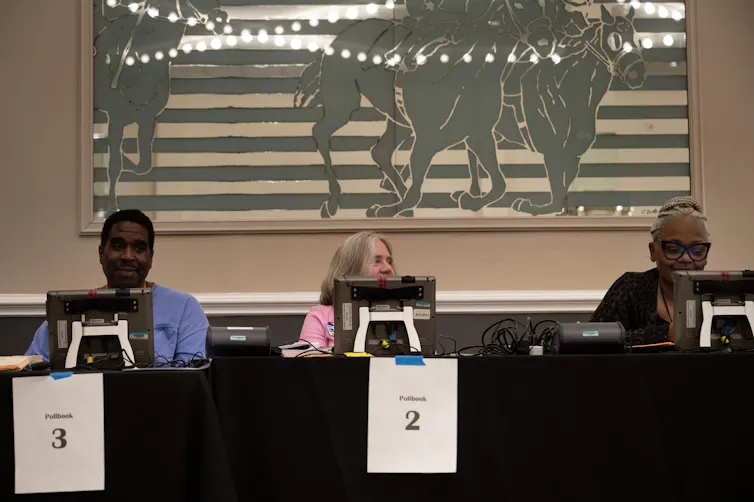
I’ve seen some news lately about people who are deciding to leave the United States. Apparently there is a long waiting list of people living in Europe who want to renounce their U.S. citizenship.

There are always articles on how to move to other countries, assuming you have enough money, focusing on which countries will welcome you and what the bureaucracy is, but while these used to be aimed at people looking to retire someplace where their money goes farther, it now seems more politically based.

After the Supreme Court’s horrible ruling this week gutting the Voting Rights Act, I saw some discussion by Black people on social media suggesting it was time for African Americans to go elsewhere. I can sympathize with that, though I doubt it’s a practical option for most.

As for me, though, I’m not going anywhere.

For one thing, the horrible things being done by the grifter and his minions to the United States are, unfortunately, not confined to the United States. I doubt there’s much of any place in the world you can be truly safe from the ravages of these people.

Also, I don’t want to live somewhere where I don’t have the right to participate in public life — to vote, to advocate, to march in the streets – and ties to other people as neighbors and friends. I’d want to be able to speak the language well enough to fit in and complain to local officials.

I don’t have any right to citizenship in another country except what they might allow through immigration, and I doubt I have enough years left to get that done, get really comfortable in the language, and actually become a full citizen before I’m too old for it to matter.

As I have written before, I am not a person with a deep connection to place. Whenever I visit somewhere else, I always think about what it would be like to live there. I’ve visited some lovely places.

Which is to say, I could probably live somewhere else. It just doesn’t seem like a reasonable course of action at this point in my life. And I don’t think running away would solve anything.

Recently it has been pointed out that anyone with a Canadian great-great grandparent can acquire Canadian citizenship. I don’t fall into that category, but I know others who do. And I know of people whose parents and grandparents came here from other countries who have recently acquired passports for those places.

If I did have the right to citizenship in another country, I would go after it, not for escaping the current regime but for the value of having ties to more than one place. Continue reading “Leaving and Staying”

Notice, Class, How Angela Circles…

I am up to my hips with reading for World Fantasy, but I was reminded of this piece which I wrote about 10 years ago. Sadly, it is still topical…

I was once chased around my parents’ kitchen by a friend of my father’s. But I’ll come back to that.

One of my favorite things to do when I was a kid was to leaf through a 25-year collection of New Yorker cartoons. Even at the time (the mid 1960s) many of them referred to a world that was vanishing or had vanished: references that must have been side-splitting at the time they were published, but were totally opaque to ten-year-old me. I still remember some of the cartoonists fondly–Chas. Addams, of course, but also James Thurber, Helen Hokinson of the deep-bosomed, slightly clueless club women, and Syd Hoff. But there was a class of cartoons–by guys like Peter Arno and Whitney Darrow, Jr.– that might loosely be termed a critique of modern relations between the sexes. They weren’t opaque, but even to me as a kid they were troubling.

A staple of these cartoons was the young, buxom woman being variously leered at, groped at, chased, etc., by an older, usually wealthier white man (well, yes, in the New Yorker of early days everyone was white). In some of these the woman is clearly playing along in hopes of–what, a diamond bracelet? A fur coat? As Cole Porter had it in Kiss Me Kate, “Mr. Harris, plutocrat, wants to give my cheek a pat: if a Harris pat means a Paris hat, Okay!” But in others, the woman looks uncomfortable and apprehensive.

As for the men in these cartoons, a few of them look hapless, as if they’ve stumbled into a situation where a woman is forcing them to ogle etc. “Honest, officer, I was just sitting here at my desk in my loud checked suit when my secretary perched on my desk to take dictation. What could I possibly do?” Others appeared to at least pretend to be looking at something other than the cleavage–pearls were a frequent fixture–but that was the joke, right? Because everyone, even a ten-year-old girl, knew that he was really ogling the woman’s breasts. But mostly these men look like they’re predators.

As a eight-, nine-, or ten-year old, what was I to make of all this? The takeaway appeared to be that all (powerful, elderly, white) men were letches. That working for such men inevitably meant some sort of harassment. That the wives of these men (who were all portly and dripping in the signifiers of their husbands’ success–furs and diamonds etc.) could do nothing but occasionally fume and nag. That the women being ogled etc. deserved it because they had breasts, because they wore provocative outfits and should have known what would happen, because they had jobs that took them out of their homes and into contact with the aforementioned predators. Some of the cartoons also suggested that there were young women who made the attraction of older, wealthier men into their jobs. All those portly, powerful, older white men were their marks (in which case it must be reasonable that the men would treat the women as prey, because the women were treating them as prey and…).

So there I am in my parents’ kitchen. I was 16 and home from school with a really horrendous cold of the streaming variety–my recollection is that I was a walking river of snot in a plush bathrobe. As I’ve said before, I grew up in a barn, and the living room windows overlooked a valley and a river and fields… very picturesque. One of my dad’s friends, a very fine painter, was painting a landscape of that view. I heard the downstairs door open, went out to the landing, saw it was–let’s call him Fritz–said hi, excused myself on accounta sick, and went back to bed. An hour or so later I went downstairs to the kitchen to make myself some tea and, being a well-raised child, I asked Fritz if he wanted a cup. He said sure, and I put the kettle on.

I’m not clear exactly how the subject of wouldn’t I like to have an affair came up–I was standing there in my blue plush bathrobe with a handful of tissues, blotting my nose and waiting for the kettle to boil.  I answered in the negative (this was all rendered more surreal by the fact that I had a crush on Fritz’s son) and may have made some comment about Fritz being my parents’ friend, and it would be weird, shading toward wrong. I was still trying to be polite, and perhaps he took that as an invitation to explain why it would be fine, don’t worry about it. Note: our stove was on an island in the middle of the kitchen floor. Gradually, Fritz moved around the island toward me, and I moved around and away. I felt rotten, and this was the last straw, but I did not want to be rude to my father’s friend. And all the time the image in my head was the one above: “Notice, class…”

The kettle boiled. I poured the water, told him where to find milk and sugar, should he want them, and decamped to my room. I think I may have locked the door, but in the event, Fritz didn’t push the issue, and while I saw him a number of times after that, his invitation was never mentioned between the two of us.

When older people excuse men for predatory workplace behavior (or predatory behavior generally) by saying “they came up in a different time,” well, yes, they may have done. But even in that “different time,” the cartoonists who were depicting these “funny” chases got the look of dismay on the faces of the women, the look of “I need this job but…” The look of being trapped. Even when I was eight- or nine- or ten-years-old I couldn’t see how that was funny.


Everyday

Today is Patreon day and tax day and sorting out many things day. I feel like a character in the Mikado. “If sometime it must happen that a to-do must be found, I’ve got a little list.”

Today there are health things, and tax, and I need to post many recipes on Patreon, and fill in two big forms, and do some research, plus there’s housework.

My body isn’t in The Mikado at all. It’s Gandalf in Lord of the Rings, shouting, “You shall not pass!”

I shall make a cup of tea, shout back at my body, and see if we can agree on a mutually convenient place to be.

Introducing Medieval England

Once upon a time, I spent an inordinate amount of my life answering questions from writers about the Middle Ages. A friend suggested this become a book and we worked together on this book for a bit, then she had to move on. I was introduced to an archaeologist (Dr Katrin Kania) and the book was much more accurate. My personal style wasn’t there and all the bad jokes had to leave, but, as a reference book for writers, The Middle Ages Unlocked was immeasurably better for Katrin’s share… even though it meant losing most of my jokes. She and I both laughed at each and every jokes as they were gently edited away.

It’s not a book to sit down and rad. It’s a book to check when you want something in particular while it’s technically about England in the High Middle Ages, we included much of France.

If we were doing it again, I’d add whole swards about life in Jewish England. Some researchers have been busy in recent years and we know a lot more about English Jews before 1290, thanks to them.

There were several writers who pushed us to finishing the book: Elizabeth Chadwick, Felicity Pulman… in fact, all the authors quoted on the cover, plus a few extra. Without their support, this book would not have happened. I didn’t want to write it, you see, way back when it was first suggested. My dream book was, in fact, an analysis of Old French epic legends, especially how insults were used and how some of the most interesting people were turned into their own kind of Medieval hero. This might be why I am guilty of writing the literature chapter in The Middle Ages Unlocked and why it just might mention those epic legends. Every chapter I wrote has something that shows it’s by Gillian. The food chapter contains information about pickles, for instance.

Our aim in writing it was to have a book writers could take form the shelf and find out more. Not just factually more, but to understand how we see the Middle Ages and where else they can find things. In the age of AI, it’s a surprisingly useful volume. It doesn’t invent. It doesn’t pull from random sources. The bad side it that when you argue with it, it does not argue back.

I Remember Marmee

This was written in the late 1990s. I had lost the file, and frankly thought I might have imagined I’d written the whole thing. And then last week, looking for something entirely else, I found it. I’ve softened a little bit on Marmee: Abba Alcott was doing the best she could in very trying circumstances (don’t get me started on Bronson Alcott, The Man and the Ego). But I’m still glad my daughter liked me better.


It is three a.m. on a Wednesday morning, and my eight-year-old daughter has been throwing up for half-an-hour. Her bed is unspeakable. She’s changed nightgowns twice. Now, afraid to go too far from the bathroom, she is lying on a blanket in the hallway, curled around her misery and muttering to herself. I do the Mom-check again: no fever, no stiffness in the neck, no rash, none of the things that would have me rousting the pediatrician out of his bed; probably a stomach bug. I sit down beside her on the hardwood floor and push her flyaway hair out of her eyes, away from her face. She asks me, in fading tones suited to melodrama and sick children, to lie down and cuddle her, so I do, shaping myself around her, half-on and half-off the blanket. She is comforted and falls asleep. I am anxious, awake, and deeply uncomfortable. I want to be asleep in my bed, if not a thousand miles away. I do not want to be lying on a wrinkled blanket on a hardwood floor next to a beloved child who stinks of vomit.

And I’m remembering Marmee.

That Marmee: the mother of Jo March and her sisters in Little Women. Impossibly wise, patient, sage and loving. Beautiful, serene Marmee. I cannot tell you how much I hate her. Because while I’m taking care of Juliana and longing for my bed, there’s a little corner of my brain that is telling me that a real mother wouldn’t feel that way. Not a mother like Marmee. Marmee would clean up the vomit and feel it a privilege. Marmee would be elevated by the experience. Marmee would make her daughter believe that nothing in her whole life has been more fulfilling than swabbing down her baby and the floor at three in the morning.

And in a sense that’s all true. I love my kids, and taking care of them is my job. But there are moments, as with any job, where the work stinks–in this case, literally. And in those moments I wonder if I”m doing this right. That’s when I go back to Marmee, the Barbie of motherhood, the impossible yardstick against which I measure my parenting.

Okay, look, I know that the fictional Marmee was Louisa Alcott’s wish-fulfillment version of her own deeply imperfect mother, as Little Women was a retelling of her childhood with all the weird bits prettied up or left out. I know Marmee was never meant to be a user’s manual for parenting. But it’s the nature of people–certainly people of my generation–to look for role models. Perhaps I do it because my own mother died before my girls were born. Maybe it’s because, with the end of the Victorian mother-worship cult, we’re left mostly with Mommies Dearest and Mommies Amok. Or maybe I was simply bit by Marmee at a young age. In any case she continues to stick with me.

She must stick with other women, too. When I finally got up the courage to dis Marmee publicly, I was not met with the cries of horror I expected, but with a rush of fellow-feeling. It’s not just me, and that’s comforting. But it also starts me thinking: I have two daughters. Do I want to perpetuate the Marmee-thing with them?

A few weeks after the night on the hallway floor, Juliana asks if we can start reading Little Women at bedtime. I wonder if I should confront the Marmee issue with her the way I did the prince issue in Cinderella (“I don’t know. Would you want to marry a guy you only met once at a party?”). In the end I decide to stay out of it and let her draw her own conclusions. About three or four chapters in, cuddled into the crook of my arm as we sit on the couch, Juliana looks up at me and says “Marmee’s kind of–I mean she’s always lecturing and telling Jo to be better than she is. If I were Jo, I’d feel like she didn’t like me the way I was.”

A little unsteadily, I ask if she feels like I like her the way she is.

“Of course you do, Mama,” she says, in the tones of one stating incontrovertible truth.

Take that, Marmee. I turn the page and begin to read again.

Have a delightful week

This week includes autumn leaves for me and spring flowers for many of you, it has “Hug a Medievalist Day” and April Fools’. There are school holidays in so many places, and long weekends in even more. There’s Passover and easter and Orthodox Easter. I don’t have time to explore all the things I know I’ve missed because I have deadlines galore and preparing for Passover.

Whatever you celebrate, have a lovely time. If you have peace and quiet, enjoy it for me as well!

Distracted Reading

I just read a book that took me forever to finish. As it was one of the many, many books I have to read as a World Fantasy Award judge the slowness of the read was a problem. Well aware of the stack of “to be reads” teetering in my room, I kept wanting to move faster. But I couldn’t. Why? It’s not a bad book, the prose is readable, most of the characters are interesting, the setting, based on an African culture, is intriguing and lovingly detailed. Sounds great.

But there was a pronunciation guide at the front of the book.

I am a whole word reader: what this means in practice is that I will note a word without hearing it (trying to learn to read using phonics slowed me down so much when I was a kid that I thought I was developmentally challenged). Even with names with multiple diacritics (signaling intonation, stress, and pronunciation) I sort of note the shape of the word and zip on past. Unless there is a pronunciation guide at the front of the book. For some damned reason, paging past that guide meant that thereafter, every time I encountered a name, I was compelled to page back to the pronunciation guide and see if I was reading the name correctly–even with the names with no diacritics. Nine times out of ten I was correct. The thing is, to get to the story and keep everyone straight, I didn’t need that pronunciation guide. So why is it there?

I generally find maps, lists of characters, explanations of social hierarchies, glossaries, and other world building stuff to be distractions. If they exist, I think they should be at the back of the book (yes, even those pages long lists of characters in Dostoevsky which I think must be provided lest the Western reader get tangled up in patronymics). I also tend to think, in modern fantasy, that these things signal, either that the author has not done a good enough job massaging the world-building into the text, or that the author is so in love with their world-building that they want everyone to see what they’ve created.

I recognize that impulse, believe me, I do. 9/10ths of the worldbuilding work I do when I’m writing second-world fantasy never makes it to the page, and yet it is work I’m proud of, and why can’t I show it off? But I don’t think it helps most books, and in some cases it actively hinders it.

In the case of this book, I think there may have been another reason for all this front matter. The author is writing for a Western audience that may not be (probably isn’t) well versed in her culture. In using a pronunciation guide she’s offering that audience an opportunity to learn her language, to get it right, to hear the names as if she was pronouncing them.

The problem is that, by doing this, the author privileged her desire that the reader get it right, over the reader’s (which is to say my) desire to stay in the story and get pulled along with it.

The presence of the pronunciation guide at the front of the book made it impossible for me not to check each time a name showed up. Why couldn’t I ignore the guide? I am not certain–maybe because for me it turned the book from a story to get involved in into a lesson. I realized the further I went, the more invested I was in sounding out the names–even names I was familiar with. I don’t think that’s what this writer intended.

Don’t get between me and your story, please. I’m distractible enough.


Some Thoughts on Cultural Exclusion

This is a post from my blog, from 9 years ago. I’ve very mildly edited it. There are two reasons for sharing it with you.

The first is that I have an intermittent fever and that my body feels as if someone is attacking it with a sledgehammer. The illness will be gone in a couple of days, but today I’m not up to much.

The second is that sometimes it helps to see the paths our current problems have travelled. I’ve been dealing with some of the current issues all my life, and yet those who have not tell me it’s all Israel’s fault and our society has nothing to do with the discrimination it carries nor the hate embedded deeply. This is a snapshot of my Australia in 2017, when Australia was adapting some of the positions that dominate today. Most of those who saw me as painted now exclude me because I’m Jewish, for instance. Almost the whole Left (where I used to belong) tells me what I am and ushes me aside or, in some cases, do things that are much worse.  I was never given the academic support to sort everything out properly (I came close), but I have moved a lot further towards understanding. I may talk more about this when I explain my books. I’ve already been explaining what those 9 years have led to, for Jews – today you see one single aspect of how it came to be.

Next week I will try to return to talking about my own books, including the one that led to this post. First, however, I need to be less ill.


Right now, the results of my research force me to reassess the world around me. This reassessment shows remarkably clear indications of how perfectly nice and thoughtful people help set up a complex culture from which bigots can source hate. Now that I know a bit more about where it comes from, I need to take a pause in my research and digest it.

I’ve written a summary of key aspects of my latest findings for those who want, and that summary has tentatively been accepted for publication. Watch social media, for I will announce it when it emerges. Beyond those findings, the project might have to wait for years. This post is a bit about the project and a bit about why it’s delayed. And how I’m living the life… but not in the way anyone expected.

Quite simply, if I get the right kind of job then I can do the full academic shebang and hit the subject hard and sort it out. I know what I’m doing and how to turn it into a book. If I don’t get the right kind of job, then slow and gentle is all I can manage, with occasional reports like this one and very occasional conference papers. I’ll be able to teach from it, and each course will be exciting and amazingly useful. That’s all, though. No book. Very few articles.

For those who have seen my work so far and have said “But this is important”, I’m sorry, but I can’t do that kind of research in my current situation. Income matters. At the very least, some of my results will appear in my fiction, for my fiction continues without money. More slowly than if I had money, but it continues.

This knowledge is based on experience. Putting other peoples’ intellectual wishes first has not helped me get enough money to live on, so I now put my own needs first in my big life decisions.

There’s another reason for putting my own needs first in those big life decisions. My research has pointed to a bunch of narratives that set up society to exclude perfectly good people and to nurture bigots. I’m right now observing how it hits the disabled and the cultural and religious minority and gender minorities. I’ve now realised how much my own life in Canberra is affected by this.

It’s complicated, but there are two main outcomes.

The first is that many Canberrans exclude me by making decisions for me regarding what activities they expect from me in my life. Some of the reasons are probably excellent. I don’t know. I don’t know what those reasons are. I am to them sufficiently lower in status to not need an explanation or consultation.

The second is related. One of the most annoying aspects of being minority right now is that earned status is difficult to retain unless one is the token representative of that minority. So in Canberra (but certainly not in all other places) I often have to negotiate work as if I were new to the workforce. And I’m one of the lucky people in my lack of seniority, for who else at my level of the hierarchy has two PhDs and whose short list of publications is four pages long? (there is no long list – I dumped it when my short non-fiction hit the 500 mark, which was while ago) And I have friends, who help. And patrons. And I’ve managed to get to several conferences this year, despite living on around $20,000 annually.

Usually these two factors lead to both exclusion and silencing. I keep pointing out that other people who are excluded are silenced more effectively. I can be left off this list or that, but I still get invitations to write and I still have things to say. This is one of my privileges. (and now I’ve used loads of current jargon – such virtue!)

Taking things back to my research for a moment, I’m talking about these issues today because I found a gap in my knowing. I need to find out if that same gap is present elsewhere, especially in my interpretation of how wider culture affects story. I need to look at who is allowed in a group and who isn’t in novels and other long stories.

I noticed something interesting in The 100 today. Skin colour counts in US tales. This isn’t new. This isn’t what I noticed. What I noticed is that focussing on US definitions of racism and silencing and exclusion to assess who got killed under what circumstances made me miss something else.

In our fiction, our central characters have certain types of personalities. It’s as if they come from a range of action or emotional figurines. We take them out of the box and play with them. Those who lack those characteristics are painted figures on the back of the box. They don’t get full lives. Most people define themselves as the figurines when they place themselves in story, as people with full lives. What I think I’m seeing is how people define those who are merely figures. And I’m seeing the circumstances when I am a figure, left behind when the figurine is brought out to play but considered to be part of the backdrop. I’m not seen as excluded because of my painted role, but my role is limited to being in the backdrop of the lives of others.

Like all of us, I carry my own prejudices and see other people as active in my life (figurines) or as backdrop (painted figures). My personal need is to find out who I see as painted figures and give them the dignity of full lives if I’ve excluded them due to prejudices I bear. I also have to accept that a lot of people who were once close to me have, in the change of culture, shifted me to the painted figure category. They want me on the back of their box to illuminate their life, but they don’t want to have dinner with me. I need to accept that some of this is due to prejudice.

As ever, this is a simplification. I needed a quick and dirty overview so that I could start to think how we do what we do.

I wanted to use the circles shutting people out that are described in Joan G Robinson’s When Marnie Was There. Anna was excluded by these invisible circles and, re-reading the book today, they felt very familiar. The subjective feeling of being excluded by invisible circles, however, rests on whatever draws those circles. In my childhood, it was a primary school child whose name I mentioned the other day to my oldest friend. She laughed and remembered, with equal irony.

This is our old way of seeing it. It works when we move from circles to circles and when we see individuals as having to deal with being alone but assign them equal status as human beings. It’s well encoded and very well described. This means that it’s a part of what’s happening culturally right now. A part. Not the whole thing. For culture is changing. We need to encode the changes. That’s what I’m doing here, but it’s a rough sketch. I need something better than toy figurines and the drawing on the box.

This means it’s back to novels. We encode cultures in the nice straightforward framework of the novel. This means that I can find out a lot about what’s happening around me by looking closely at how we depict ourselves and what we write into a story without knowing. The most worrying discovery so far is the one I explained in my Helsinki paper. The Helsinki paper isn’t for publication yet. This isn’t because it’s bad research. It’s because that paper encapsulated the moment when I realised just how big the thing is that I’m doing and how large its ramifications.

I wish I had that fulltime academic job. I wish that researching this didn’t have to come at the end of the month, after everything else. I only do the amount I do because I’m efficient at it. I can’t spend large amounts of time in archives and libraries right now for I simply need to spend that time earning grocery money. That’s my lifestyle problem.

My scholarly problem right now is that, with this strange lifestyle, I’m carrying too much baggage. I can’t do the research partly because I need income, but the lower status lifestyle gets in my intellectual way. The life carries emotions with it. Every time I’m excluded I feel them come to the surface, for I need to explain them.

Those emotions are why I’m not making as much sense as I’d like tonight. I’m in the middle of big things, intellectually, and my life echoes them.


Easy Access vs. Vibe

I am volunteering twice a week at an elementary school in downtown San Francisco, and enjoying it immensely. Part of what I enjoy is the roughly ten minute walk from BART to the school, which takes me through a somewhat rough neighborhood which is slowly turning around. There are a couple of nail salons, and a couple of coffee shops, one of which I have been eyeballing since I first started volunteering in October. I haven’t been in yet, and today I realized why I stare wistfully at the door but don’t go in. It’s partly a Me thing, but partly a Them thing.

In terms of the Me thing? I sometimes have a problem going in to stores and particularly restaurants where I don’t know the lay of the land. I have largely overcome this, but I can recall times in my life where I would walk by a restaurant six or seven times before deciding I just… couldn’t. It’s the same thing that happened to me (way back in the Pleistocene era) when I had to make a long-distance call for the first time, one of those calls where you had to ask for operator assistance, and the phones had rotary dials, and the world was a sweeter and more innocent place. I have vivid memories of being nine or ten, trying to call my grandmother (or perhaps my mother who was visiting my grandmother) in far away Los Angeles, and putting it off and putting it off because I would have to ask the operator for assistance and I just… couldn’t. I couldn’t admit that I needed the help, because what if she said no? (It would have made no difference to me to have it explained that it was the operator’s job to help me, that she was waiting, hopeful that I would ask for her assistance, etc.) I was ashamed of needing help making a phone call that could not have been made in any other way at that time. So that’s the Me thing.

But the Them thing? This is a very hip establishment located on the bottom floor of what I think used to be (by the look and layout) a small manufacturing business. 20 foot ceilings, large open space, decorated in industrial chic (pipes and ducts are a feature, not a bug). It looks like it would be a nice place to sit and read or get some work done. There are seats by the window, a scattering of two or three tables, then a long, curved wooden counter with seating on one side, which surrounds the roasters and attendant equipment, and more curved counters to the rear… but no immediate visual information about where the hell to order your caramel macchiato with two shots. I look in the cafe window and imagine going in for a post-kindergarten-chaos latte, but I can’t imagine where I’d order it. The layout is too cool to be visually parsed from the street.

I wonder if this is deliberate. In my most self-deprecating moments, I imagine they want to discourage aging neurotics from messing with the vibe of the place. More realistically, I suspect that whoever designed the layout was thinking about that vibe, but not about human behavior. This happens with some designers: my first job, I worked at the Harvard Graduate School of Design, in a huge, award-winning poured cement building that was always glacially cold, and where the famous glass ceiling over the vast studio area routinely leaked all over the desks when it rained. The building looked really cool, was much admired and, as I said, had won awards. But no amount of award-winning design can compensate for a little commonsense planning.*

I am going to go get a coffee there. I swear. The designer’s unwillingness to create a space that welcomes a passer-by will not defeat me, so long as I am able to defeat my own unwillingness to ask for help. If possible, I will refrain from standing in the doorway yelling “where the hell do I order my coffee?” Wish me luck.

_____
* I worked in the basement of the building, and one day heard streams of profanity issuing from down the hall. When I went to investigate I found an HVAC technician who explained, when I asked, that the Air Conditioning unit had died. It had been installed after the building foundation had been poured; then cement floors were poured on top of it. This might not have been a problem except that the unit was enormous, and the doorway that had been specified was not large enough to allow the old unit to be removed, or a new unit to be brought in. 

Comfort

It’s Purim, there’s a war on, and antisemitism is shifting and… I need a break. My Purim is splendid, full of friends and food, but it’s not traditional. We meant it to be traditional, but last night my friends and I needed to talk and to understand. So much of our everyday is unsafe and difficult and last night the Purim meal brought people together who’d seen different sides of similar problems. There was comfort in knowing that healing can happen, but the Megillat Esther and getting drunk didn’t happen. We drank, but the issues we talked about were so intense that the drinks weren’t refreshed more than twice.

Tonight will be more traditional, but still, the comfort is in the friends this year, not the tradition. The left in Australia sill blames Jewish Australians for anything they think is wrong with the world. I’ve taken to calling this a cultural form of colourblindedness, because those who don’t choose hate but accept it may not be doing it intentionally. If they do it intentionally, I will criticise that, but who does it help when you point to a wall and say, “Do you love the colours?” and all they see is grey. My resolution for this year was to see humans for their humanity and only place blame when a given person has earned it.

I need a book or TV show to back up my new metaphor and of course I have one. The Stargate series manages to incorporate an astonishing amount of (admittedly mostly half-baked and often wildly stereotyped)  mythology and history and culture. There’s no Australia, and there are only modern US Jews. Even rebellion in Ancient Egypt is Jew-free. It’s not one of the shows that intentionally shares hate. It draws on all the normal cultural stereotypes and has an archaeologist with three PhDs to explain them. I suspect the Jewfree ancient world was a matter of cultural safety, because explaining early Christianity as alien might not go down well, but when I watch it back a quarter of a century or so later, All I see are vast gaps in logic and common sense and history. So much of who we are is because groups interconnect. Cultures seldom operate in isolation. The Jews of history are some of the great connectors, whether in the Ancient World, the Medieval, or right now. It’s what happens when you combine diasporic culture with a high level of literacy.

Leave any culture out and there is a hole. Leave the cultures and people who connect with others, or are foundational for modern culture and things fall to pieces f you look too closely. That colourblindedness is a problem when the colours are critical to history as we know it. In Australia, many in the 19th century saw a Terra Nullius and destroyed so much. With Jewish history and Jews… I could talk for days about what people think they see when they don’t see us. Or people who want Jews dead to get rid of the annoying discrepancy between what they see and how the world works.

And this is why Stargate is comfort food. It doesn’t work at all if you look too closely. This is a good reason to sit down with some popcorn and let reality do its own thing for a couple of hours. I can’t save the world, but I can rest from it in a world that cannot exist.


PS I used a German sour cherry jam for Hamentaschen. I can’t buy it locally but, in case you’re wondering, if you use puff pastry for hamentaschen (some years I do and some years I don’t) it’s the best filling.