
 I don’t attend many science-fiction/fantasy conventions these days. Pre-pandemic, I often attended conventions on the West Coast, including Orycon in Portland, Oregon. I’d add a day or two on each end of the convention dates to get in a visit with my best friend from college and a dear writer friend. Ditto going south to Loscon in Los Angeles or Condor in San Diego, or larger conventions like World Fantasy or SFWA’s Nebula Awards weekend when they’re held on the West Coast. Sadly, both friends have died, so even before the pandemic, I found it harder to fly north. Orycon has closed, and I believe that Condo has, too. Nevertheless, I always try to make it to my local con, Baycon/Westercon. It’s within driving distance, although a bit far to commute, and it’s a vibrant, diverse community.
When I attend a convention, I do so as a professional author, so I almost always appear on panels, readings, and autographing sessions. Some conventions request that potential guests submit proposals for events. If panel topics are accepted, the guest then moderates them. This was the case for 3 of the 6 panels I appeared on (* = I proposed and moderated this panel). Here are descriptions, with a few notes on how the discussions unfolded. With only one exception, I have avoided using the names of panelists and audience members. All the opinions are my own!
The Reality of Fiction. We normally think of fiction as unreal, but quite a few authors talk regularly with their fictional characters about the story and where it should head. How does this work? How can knowing some of the psychology involved give us a livelier relationship with fictional characters? What wisdom for life might they impart when listened to?
I arrived a bit early, as is my custom, to find the panelists wondering who the moderator was and expressing their unwillingness to do it. “Okay,” sez I, “I’ll do it.” Therein followed a fascinating divergence between the tired, perennial question, “What to do when your characters won’t behave the way you want them to?” and how much your characters reflect yourself—is this a good thing or a bad thing?–versus my personal focus, “Where is the energy in the story? Character (Hamlet), plot (thrillers), ideas (mysteries)…and how difficulties with characters arise from mismatches between different elements.
*Writing our Nightmares. What horror, dark fantasy, and related genres can teach us about surviving personal and political catastrophes.
The idea for this panel arose from two incidents: Octavia Butler told me that she took the things that really scared her and put them on paper; in a horror panel many years ago, when I said I had enough nightmares in my life, the other panelists showed me how horror can shine a light in the darkest places. As writers, we have agency; as readers, we trust that the protagonist, no matter how vulnerable, has or gains power over their fate.
We talked about having lost many traditional methods of dealing with trauma, so horror as a genre offers catharsis via the story journey; the end is different from the setup. “Horror is safer than memories.”
Finally, the zinger trope: “Play nice or I’ll put you in my novel” (and you won’t come out unscathed)!
*Finding Our Tribe. Writers, readers, and fans share how storytelling creates communities of understanding, acceptance, and celebration of differences. From fandom as family to writing as a way of healing, stories transcend the fear and prejudice of our times.
My thought in proposing it was to celebrate how the science fiction/fandom community welcomes and celebrates those who feel they don’t fit in anywhere else. This could be folks “on the spectrum” (of autism), sexual and gender minorities, racial and ethnic minorities, geeks of all flavors, and so forth. Everyone in the room had a version of a “finding my home here” story.
The second aspect was ethnic or ancestral communities. I was fortunate to run into one of my favorite co-panelists, an Indigenous elder, and invite him to participate in the panel. He brought the perspective of tribal membership being integral to identity, the history of near-extermination, and the separation he experiences between his role as elder and teacher, and his love for science fiction not shared with fellow members of his tribe. He helped us to understand the difference between tribal and tribalism. Tribal affiliation nourishes community and deep understanding of collective history. Tribalism creates a distinct “in-group” (those we identify with) and an “out-group” (everyone else).
Three of us were Jewish, and the only thing we agreed on was that we don’t agree on anything except being Jewish (“two Jews, three opinions,” more like “twenty-five opinions with footnotes and appendices spanning 2,000 years of commentary.” You can join if you’re willing to study hard for a year and pass a board examination. Otherwise, “Are you nuts?”) Much laughter ensued.
*Escapism is Not a Dirty Word! Panelists and participants share their favorite comfort reading and how it informs, sustains, and gives us hope. Continue reading “Baycon 2026 report”…

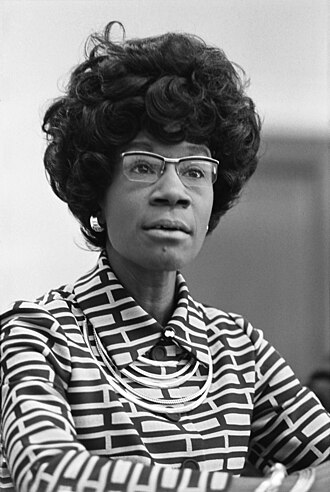 The first vote I ever cast in a presidential election was in 1972 for Shirley Chisholm.