My everyday might be a bit busy

I’m a bit snowed under right now. It’s mostly for the best reasons.

First, I have to do minor revisions and then I will have a PhD. I’m meeting with my supervisors this week to work out the best approach. Once the adjusted thesis has been submitted, that’s the end of doctoral studies for me. I promise I won’t do another PhD!

Second, I’m meeting with a Robin Hood scholar for shared work on Eustace the Monk. That guy haunts me.

Third, proof-reading is being done for a novel. More about that when announcement time arrives… which is not far away.

Fourth, this weekend I’m at the virtual end of Balticon. I have some wonderful panels and the best possible company.

Fifth, Swancon (the Australian national science fiction convention in Perth this year) is the weekend after. I’m running the Huamnities side of the academic programme. I’m lucky in the people I work with, because it’s all a lot easier for me than I expected. This is through the hard and clever work of the chief runner of all academic things and because of the Swancon team as a whole.

Sixth, I have a novel I need to write and a NF book to find a home for.

Seventh, I’ve my ME/CFS back. Aren’t I lucky?

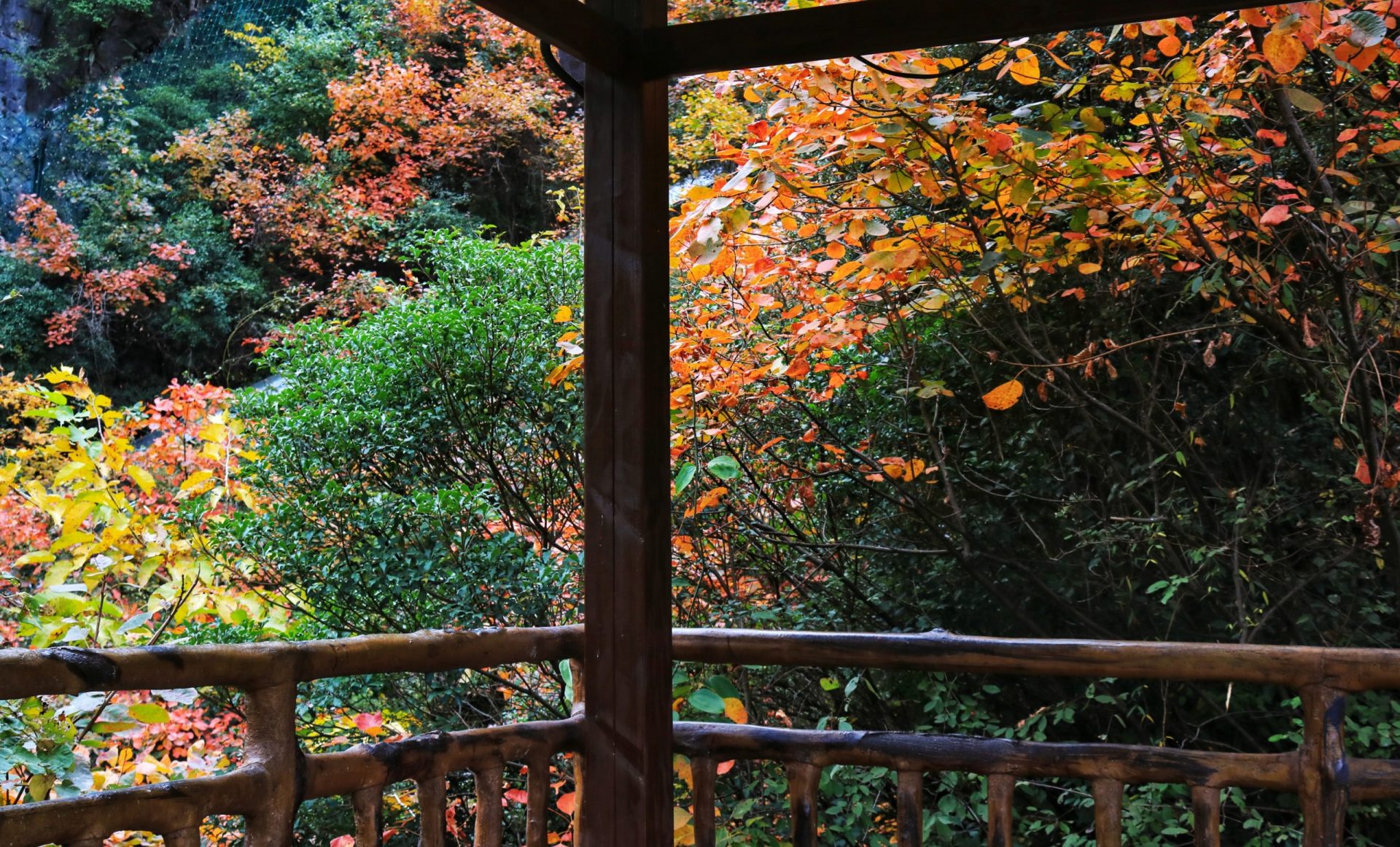
I’ve had it for a while, but it’s reached the place where I can do things and this means I can overdo things and get set back for a full year if I’m not careful. I’m one of the lucky ones in that I get remission. I’m unlucky in that I was finally succeeding with an exercise programme that was enabling me to walk a full kilometre and I was so proud of myself. Pride and falls – we have reached the time of the fall. Not all falls are bad. It’s autumn in Canberra, so, if I wander in the right suburbs, I get to see autumn leaves. A friend and I investigated leaves last week, and we jumped in them and it was lovely.

With all this going on, later today I’ll put up posts for the next fortnight. They will magically appear on the right day and it will look as if I’m diligent and at my desk. I will be neither diligent nor at my desk, but I will be spending time with wonder and friends and much talk of speculative fiction. Also, I will be giving a workshop.

The noise you hear in the background is the Australian Royal Commission into antisemitism and social cohesion. It’s not the Commission itself, but many who hate coming out of the woodwork and making sure we see them. Most of them complain that too much energy and attention is being spent on Jews. This is beyond irony.

Threads and Stitches

A few years back, at an event in which Rebecca Solnit was talking with Joan Halifax Roshi, she said something I remember as “You know what you do. You don’t know what you do does.”

That apparently can be traced back to Foucault. I am not well-versed in Foucault, but I like the idea a lot. You should just do your work – the work that you think matters – and leave what it does to the future. You can’t control what it does.

I know, for example, that various things I learned from Aikido teachers along the way have stayed with me, and that I have been pleased – and sometimes surprised – when someone tells me that something I said on the mat or in a presentation stayed with them.

Likewise many things I’ve read have affected me, such as the ones I’m writing about here. And I’m always thrilled when I discover that something I’ve written had an effect on someone else.

You do what you think is important and sometimes someone else gets it and takes it somewhere else. That’s what life is about.

I just finished reading Solnit’s The Beginning Comes After the End, and was struck by this sentence:

You yourself are not a single garment of destiny, but a thread or a stitch in the tapestry.

She is talking about how interconnected we are, despite all the efforts to disconnect us. It’s also a warning to let go of the hero myth, to reject the idea that there is one hero coming to save us all, that one hero becomes the garment of destiny. Continue reading “Threads and Stitches”

Plumbing

I got my start as a writer back in the long-ago, writing Regency Romances. These were relatively short novels that charted the progress of two characters toward each other, ending in a happy ending and (presumably) a wedding, set against the backdrop of the English Regency. I wrote five romances and then stopped. Not because I didn’t love the setting and the era, but because nudging two people toward each other, with no possibility of a surprise (given the expectations of the form, if you buy a romance, you expect that happily ever after) stopped entertaining me. And I write to entertain myself, first and foremost.*

But that wasn’t the only reason I stopped. At that time the expectations of the romance genre were, um, broadening, and I found I wasn’t very interested in the way things were going. This was the dawn of the Big! Sweeping! Highly Sexualized! romance, with lots of sex scenes using lots of (to me, risible) descriptions of sex which I found as arousing as plumbing manuals.

I am pro sex, personally, and in fiction. But many of the books I looked at at the time were, um, sex-scene delivery systems wrapped up in a thin coating of historical setting. Most of the books had protagonists who were of the middle and upper classes, who were swept off by pirates or brooding Earls or some such, and not-quite-forced into having mind-blowing sex, swept away on a tide of passion that overcame all their prior training about what a woman of good family did or didn’t do and… And there were (in my admittedly smallish sample, because most of the books I looked at were not to my taste) never any consequences. Not the obvious ones–pregnancy and STDs**–but the very crucial societal consequences to a woman of good family. This drove me nuts, and is part of the reason I started writing my Sarah Tolerance books.

I mention this because I’ve been reading a lot of “romantasy” of late, for Reasons. And I have, therefore, staggered through a lot of plumbing. Er, sex scenes. And some of those books come off as sex scene delivery systems wrapped in a thin coating of fantasy tropes. Not my thing. For the people who love this stuff, it is exactly what they want, and I’m happy for that. Everyone should have access to the fiction they want to read. And I think the authors of these books are just as happy as their readers–I don’t believe it’s possible to write this kind of fiction unless you subscribe to it wholeheartedly.

But I would like to suggest to those writers (who are probably not seeing this) that sometimes less truly is more. A little less specificity as to what goes where allows the reader to insert their own idea of what is romantic/erotic. Lead me to the bedroom door, as it were, and my imagination can tailor a scene that contains everything I find satisfying. Giving too much specific detail (particularly when the details are in language that makes me snicker) makes that impossible. I once had a writing student, a nice guy who wanted to write Harlequin romances, and (as I put it at the time) filled his books with more thighs and breasts than a poultry counter… but lacked incense. Sometimes the thighs and breasts get in the way of  the emotional core of the scene, which is what I’m there for.

We know how the plumbing works.  Tell me less.


__________
*I’m sorry if that sounds selfish, but honestly, if I’m not having a good time why would a reader?
** And dear God, why everyone in Europe didn’t have syphilis at this time I do not know, so how any of these characters could have dodged that bullet…especially with pirates and brooding Earls, neither of whom were famous for restraint…

Australian and Jewish… again

I’m sorry I missed last week. Jewish Australia is a bit… different. There’s a Royal Commission into antisemitism and social cohesion. I’ve submitted 22 pages to it and keep thinking I missed critical things. Last week was the first of the public hearings, and by Monday morning 9,400 submissions had been made. There are so very many that the open period for submissions was extended by two weeks. This is a vast number, for the whole population of Australia and all its territories is significantly less than the population of California. We fit somewhere between the population of Florida and Texas. If you printed the submissions and handed them out to random Jewish Australians (using the Monday morning numbers, weeks before submissions close), one in eleven would receive an interesting document to read.

Antisemitism is pretty bad here, and whatever the Royal Commission decides will determine our future in many ways. In equally many ways, our future rests on how the rest of Australia feels on hearing just how difficult life has been for Australian Jews.

Even checking up on what is said in the first lot of public hearings was exhausting. So many reports had me nodding alongside, think, “Yep, that’s happened, and oh yes, that too.” I am still annoyed by the people who accuse Jews of complaining too much or of clutching pearls or of being perpetual victims, or of being guilty by dint of being Jewish. In a perfect world, they would stop and listen. They would also not tell me, when I quietly let them know some of the worst incidents, “But what about Gaza?” So many are saying, “If every Australian Jew disassociated themselves from Israel, then there would be no antisemitism.” This is oddly funny, because other times and other places when there have been hate we’ve been told the same thing. Convert to Catholicism was the argument in 15th century Spain. And then came the definitions of impure blood and Judaicising. Some of those who had done the denial as asked were burned alive as Christians because their denials weren’t believed.

It’s a very strange month.

The Damage Keeps Growing

The New York Times recently reported that the National Weather Service is understaffed just as storm season is heating up. And while the Times doesn’t go into the details, anyone who was paying attention last year when the DOGE (pronounced “dodgy”) minions were running rampant through the government knows the absurd cuts they made are why the agency is short-staffed.

According to the article, the current director is saying that restructuring is good, but I don’t think anyone would want to begin their restructuring with massive cuts and loss of both experienced personnel and the new people they were mentoring.

Mind you, the Weather Service was one of our government’s great successes. Forecasting is so much more accurate now than it used to be. That’s in great part because the National Oceanic and Atmospheric Administration, which includes the Weather Service, put together world-class research.

NOAA in general is under attack from the regime, with the National Center for Atmospheric Research in Boulder, Colorado, set for closure.

While this damage is already showing up in the forecasts for tornadoes and other storms and makes us all wonder what happens if this year turns out to be a big one for hurricanes, the odds are it’s going to leave us with less than adequate weather forecasting for years to come.

And it’s that ongoing effect – one that’s not limited to the Weather Service – that really bothers me.

Paul Krugman had an excellent piece this week on how the various cuts in social programs during the Reagan administration – a time that gets treated like history today though there are still quite a few of us who remember just how bad it was – have affected life expectancy in this country. Continue reading “The Damage Keeps Growing”

Leaving and Staying

I’ve seen some news lately about people who are deciding to leave the United States. Apparently there is a long waiting list of people living in Europe who want to renounce their U.S. citizenship.

There are always articles on how to move to other countries, assuming you have enough money, focusing on which countries will welcome you and what the bureaucracy is, but while these used to be aimed at people looking to retire someplace where their money goes farther, it now seems more politically based.

After the Supreme Court’s horrible ruling this week gutting the Voting Rights Act, I saw some discussion by Black people on social media suggesting it was time for African Americans to go elsewhere. I can sympathize with that, though I doubt it’s a practical option for most.

As for me, though, I’m not going anywhere.

For one thing, the horrible things being done by the grifter and his minions to the United States are, unfortunately, not confined to the United States. I doubt there’s much of any place in the world you can be truly safe from the ravages of these people.

Also, I don’t want to live somewhere where I don’t have the right to participate in public life — to vote, to advocate, to march in the streets – and ties to other people as neighbors and friends. I’d want to be able to speak the language well enough to fit in and complain to local officials.

I don’t have any right to citizenship in another country except what they might allow through immigration, and I doubt I have enough years left to get that done, get really comfortable in the language, and actually become a full citizen before I’m too old for it to matter.

As I have written before, I am not a person with a deep connection to place. Whenever I visit somewhere else, I always think about what it would be like to live there. I’ve visited some lovely places.

Which is to say, I could probably live somewhere else. It just doesn’t seem like a reasonable course of action at this point in my life. And I don’t think running away would solve anything.

Recently it has been pointed out that anyone with a Canadian great-great grandparent can acquire Canadian citizenship. I don’t fall into that category, but I know others who do. And I know of people whose parents and grandparents came here from other countries who have recently acquired passports for those places.

If I did have the right to citizenship in another country, I would go after it, not for escaping the current regime but for the value of having ties to more than one place. Continue reading “Leaving and Staying”