Cooperation Makes It Happen

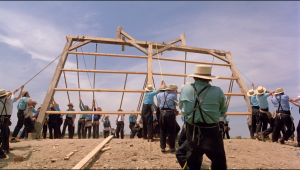
The Amish raise a barn. From Witness, 1985.

When my kids were small we watched a lot of Sesame Street. A lot. A co-worker who also had a small child and I would meet each morning to briefly determine what the Sesame Street ear worm for the day was, so that at least we weren’t cross-infecting each other with bouncy pedagologic songs. One of those sons was “Cooperation.” The lyrics were something like “Cooperation–makes it happen! Cooperation: working together.” A fine sentiment to teach four-year-olds. Or, as it more and more appears, 40-, 50- and 60-year-olds.

What is up with us as a country? With the crowd of people out there who rail against cooperating with the effort to get a handle on Covid-19 by wearing a mask, because (as I interpret it) “you’re not the boss of me?” Is this the logical endpoint of that American trope, the myth of Rugged Individualism? Continue reading “Cooperation Makes It Happen”

Comfort zones

My home life revolves around food two days a week. I love cooking and for a year I’ve had almost no-one to cook for.

I discovered some months ago that when I don’t cook, I get more stressed. I’ve been nodding sympathetically at people’s stories of the joy of baking and their discovery of sourdough.

I have a very large repertoire of dishes and I love cooking and… I’m on a bit of a restricted diet. Also, I have deadlines on top of deadlines.

This is why I liberate myself twice a week. To be honest, it’s sometimes more than twice a week and sometimes less. This week it’s been fewer long sessions but more sessions, because someone gave me many tomatoes and I made a tomato base for almost any food. It was one that took four days, on and off, because it’s winter here and tomatoes are watery. Six kilograms of tomatoes gave me 1 ½ litres of my sauce. I instantly gave a half litre to a friend who is helping me get out of the internet nightmare this month has been (I haven’t lost my internet at any stage, but my landline has been missing in action for twenty days so far), so I have just enough for seven days of interesting food.

When that was done, I looked in my fridge. I have trouble putting out rubbish (the bins are tall and heavy and 100 metres away, and I’m working on my lifting muscles so that I can regain that truly exciting fragment of my life) so when friends come by, they often take a bag of rubbish out with them.

Since I know this friend will be drilling in my wall tomorrow to help solve one of the problems that has been bugging things around here, I spent an hour tonight chopping up everything that looked old or in need of finishing. I threw out the bruised mushrooms and cut the rest. I found so many shallots, getting sad and in need of love. That was really all I did tonight. I have several containers of vegetables, and I have all that passata, and I have 3 meals’ worth of salads made, so I don’t have to cook until Friday. I will probably do another bout on Wednesday, for cooking helps me think, then I’ll leave it to the weekend. All the scraps are ready to go out and my fridge looks much less crowded.

What am I going to cook with the tomatoes and vegetables? I’m so glad you asked.

One container is earmarked for shakshuka, because I have everything I need for that except cayenne and I can wing cayenne given I have seven other types of chili. The other is for a pasta sauce with those mushrooms, some of the shallots (or maybe an onion), kalamata olives, feta cheese and maybe, just maybe, some green capsicum. These are both easy and quick dishes once one has a good tomato base, and this week is furiously busy.

I’m not cooking any bread. I can cook bread. I’ve cooked bread since I was a pre-teen. It’s not good for me and I love it and everyone else is talking about it all the time, so I’m not even going to make a flatbread to eat with the shakshuka. Yes, I’m sulking. Bread is fun to make and kneading gives me time to think and my writing is the better for it… but it’s not good for me. I have a right to sulk.

When I’m past this deadline I get to explore some of the more interesting ingredients in my cupboard. Some of my friends (who know me all too well) send me little parcels of local food from their country or they send me chocolate and tea. Food. I get occasional hampers of food from wise friends. I love these hampers and I eat most of them fairly quickly, then stash some parts away for when I need to be cheered up. I have herbes de Provence from France and chocolate from Ireland and grits from Germany and more, hidden so that on bad days when I open the larder and stare in misery, memories of those hampers stare back and I’m forced to smile and totally and entirely forced to cook.

Some of my ingredients are a little old now. I’m still saving them. I predicted the disruption to international post and knew my presents from friends would be rare for a time and I refused to not have my friends make me smile, so I checked all the use by dates and put the must-eat at the friend of the larder, the must-eat within a few months within eyesight (but not at the front) and the will-;last-forever under everything.

What’s very odd is despite the fact that I’m not supposed to mix with people (iso is iso – so many of us have health issues) I make sure I have enough food to feed several friend sin case they drop round. Which they won’t. Which, in fact, they can’t. But it makes me happy to know I can feed people.

This post was brought to you by my favourite (Korean) instant noodles. They are one of my cheer-up foods and they are currently unobtainable. I ate my last packet tonight. Don’t worry – I still have chocolate.

A Breath of Frustration

Awhile back I listened to Terry Gross interview James Nestor about his book, Breath: The New Science of a Lost Art. From the interview, it appeared that the book was about both the long-held knowledge about breath and breathing and the way science was now confirming that those old systems had a lot of value.

I was intrigued, because I have learned something about breathing in martial arts and qigong training and have studied a little bit of yoga breathing as well. I wanted to know about more of those practices and about what science was finding. From the way Gross did the interview, I assumed the book was built on quality reporting and good science.

I downloaded a sample and while I wasn’t impressed with the writing style (which, perhaps because Nestor primarily writes for Outside magazine and similar outlets, was overly personal and casual), I decided getting the information would be worth putting up with the style. So I bought the book.

And was terribly disappointed. There wasn’t as much information as I’d hoped for about traditional breathing practices (though there is good material in the appendix) and much of the scientific research came from the kind of people who go off and research on their own because no one else gets their genius. Every so often, such people are real geniuses, but most of the time, they’re cranks or quacks. Continue reading “A Breath of Frustration”

Two New Approaches to Treating COVID-19

There’s a lot of very cool immunology research being done right now in response to the COVID-19 pandemic. Anti-virals and vaccines top the list for many. But there are significant problems with each — anti-virals have not proven to be wonder drugs, offering only modest help for those already seriously ill, and an effective vaccine is still months or years away. Vaccines may have to be tailored to the age and immune status of various groups, just the way flu vaccines are. But there are other ways of thinking about minimizing both mortality (deaths) and morbidity (illnesses).

Coronavirus and cancer hijack the same parts in human cells to spread – and our team identified existing cancer drugs that could fight COVID-19

This is from Nevan Krogan, Professor and Director of Quantitative Biosciences Institute & Senior Investigator at the Gladstone Institutes, University of California, San Francisco

Kinases are proteins found in every cell of our body. There are 518 human kinases, and they act as major control hubs for virtually all processes in the body. They are able to add a small marker – a process called phosphorylation – to other proteins and thus change how, if and when a phosphorylated protein can do its work. Many cancers are caused by overactive kinases leading to uncontrolled cell growth, and drugs that slow kinases down can be highly effective at treating cancer.

Kinases are also fairly easy to target with drugs because of how they add phosphorylation markers to proteins. Researchers have developed a huge number of drugs, particularly cancer drugs, that work by essentially throwing a wrench into the mechanics of specific kinases in order to stop cell growth.

Viruses also change the function of cellular machinery – albeit on purpose – but instead of causing cell growth, the machinery is repurposed to produce more viruses. Not surprisingly, viruses take control over many kinases to do this.

It is impossible to actually see which kinases are activated at any time, but since each kinase can attach phosphorylation markers to only a few specific proteins, researchers can look at the phosphorylated proteins to determine what kinases are active at any time.

Some of the more interesting ones include Casein Kinase 2, which is involved in controlling how a cell is shaped. We also identified several kinases that work together in what is called the p38/MAPK signaling pathway. This pathway responds to and controls our body’s inflammation reaction. It is possible these kinases could be involved in the cytokine storm – a dangerous immune system overreaction – that some patients with severe COVID-19 experience.

While identifying the kinases involved in SARS-CoV-2 replication, we were also able to learn a lot about how the virus changes our bodies. For example, CK2 becomes much more active during the course of coronavirus infection and causes the growth of little tubes that extend from the surface of the cell. Under a microscope, it looks as if the cell has a full head of hair. We think SARS-CoV-2 might be using these long cell outgrowths – called filopodia – as viral highways to get new viruses closer to neighboring cells, thereby making infection easier.

There are 87 existing drugs that change the kinase-controlled pathways used by the coronavirus. Most of these drugs are already approved for human use or are currently in clinical trials to treat cancer, and could be quickly repurposed to treat COVID-19 patients.*

Continue reading “Two New Approaches to Treating COVID-19”

Marine Life Thrives at Mote Aquarium in Sarasota, FL

Everyone who knows me knows how I feel about wildlife and nature. I don’t support old-fashioned zoos that keep animals in cages, but I do support wildlife conservation efforts and study. I completely support organizations like the Mote Aquarium in Sarasota. The Mote says,

We are guardians of the sea and all living things that depend upon it

It’s a wonderful place, and they’ve put good procedures in place to ensure that visitors, staff, and resident sealife can continue safely during the COVID-19 pandemic. Visitors are allowed as long as they wear masks and follow safety procedures. Many “hands on” experiences are not possible at this time, but as Dr. Oliver Sacks pointed out to his friend Shane Fistell in one of the videos we used to watch in class, “We see with the eyes, but sometimes we see with the hands.” Right now for everyone’s safety, it’s important to keep “seeing with the eyes,” especially when we’re near living creatures who might get sick if we touch them.

Just like people, animals have personalities, and the personalities at Mote Aquarium are remarkable. One of the first animals I met while visiting there was a sprightly small turtle.
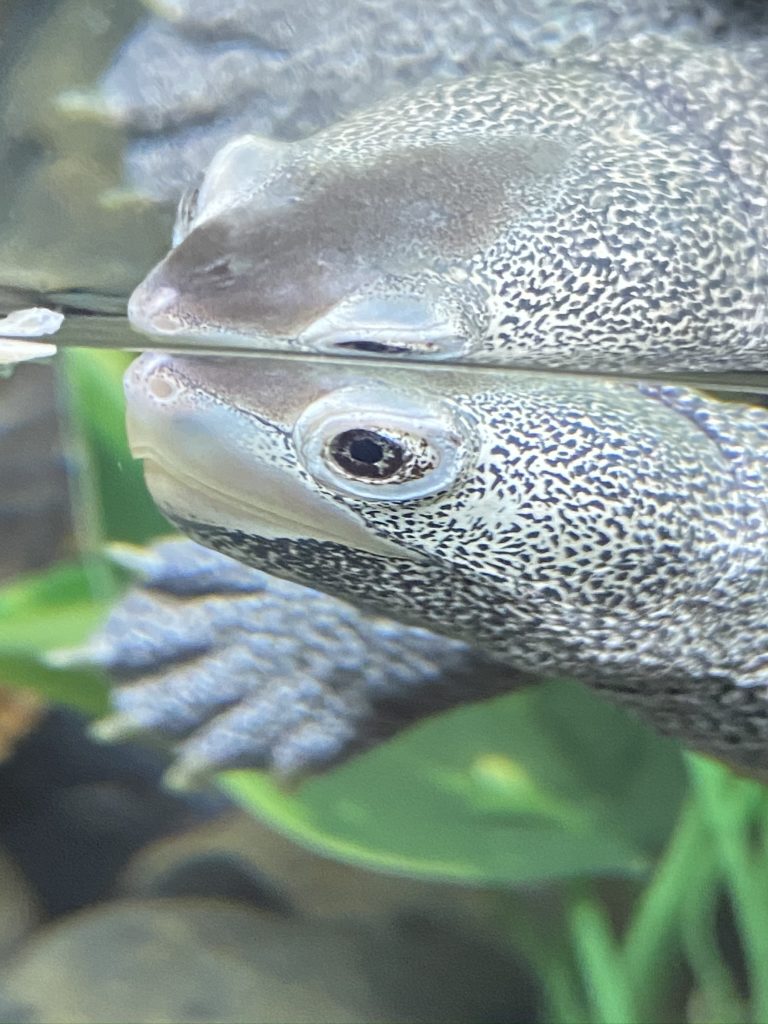
Very calm and interested, he swam for a bit, then settled back on a rock to watch the interesting, strange creatures peering into his home.

Here’s a link to the Manatee Cam so you can see what a great environment the Mote provides.

I’ve seen several manatee since we moved to Florida, but the Mote manatee, Hugh and Buffett, are “movie stars” compared to wild manatee. Their skin and tails are spotless and perfect. In the wild, manatee are covered by all manner of sea creatures and usually as well as sadly, many scars. Despite laws to protect them and lots of education, they are still injured by boating mishaps. They still suffer because of boating destruction of the sea grass they eat.
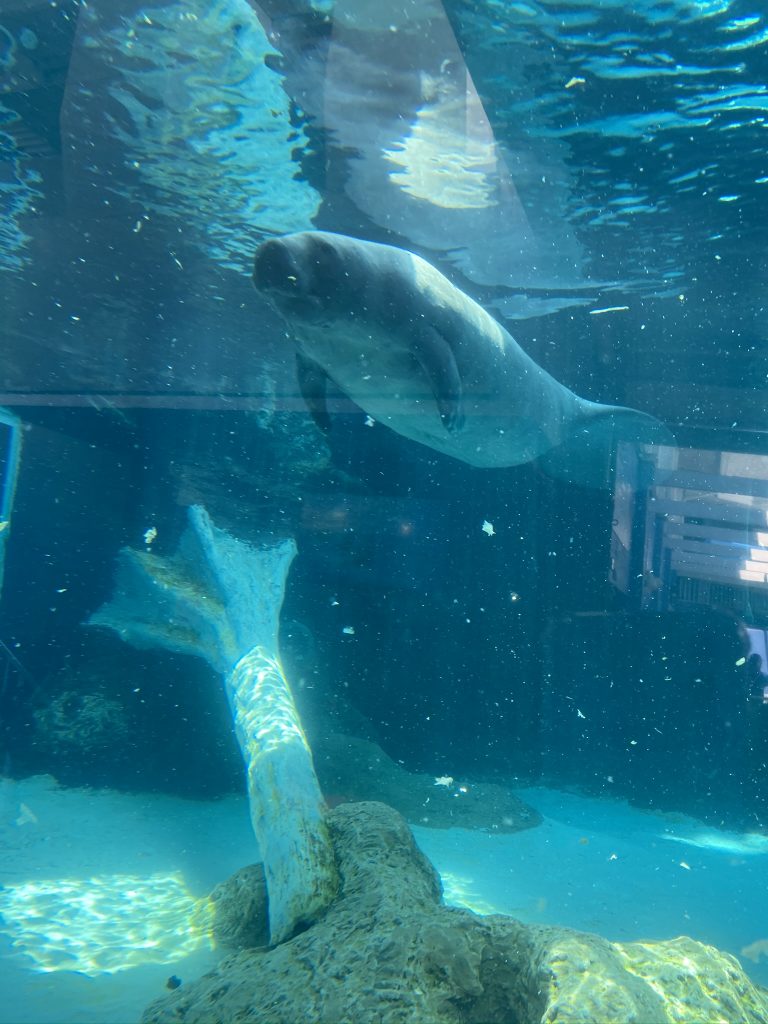
This is my best manatee picture from the aquarium – is it Hugh or Buffett – I don’t know!

I also had an interesting visit with one of the sea turtles that lives at the aquarium. They care for several sea turtles, all of which are rescues and which have different injuries or other circumstances that mean they won’t be able to safely return to the wild. Again, as everyone who knows me knows, sea turtles are among my favorite living creatures. One of the high points of my life was swimming alongside of one while snorkeling in Kauai.
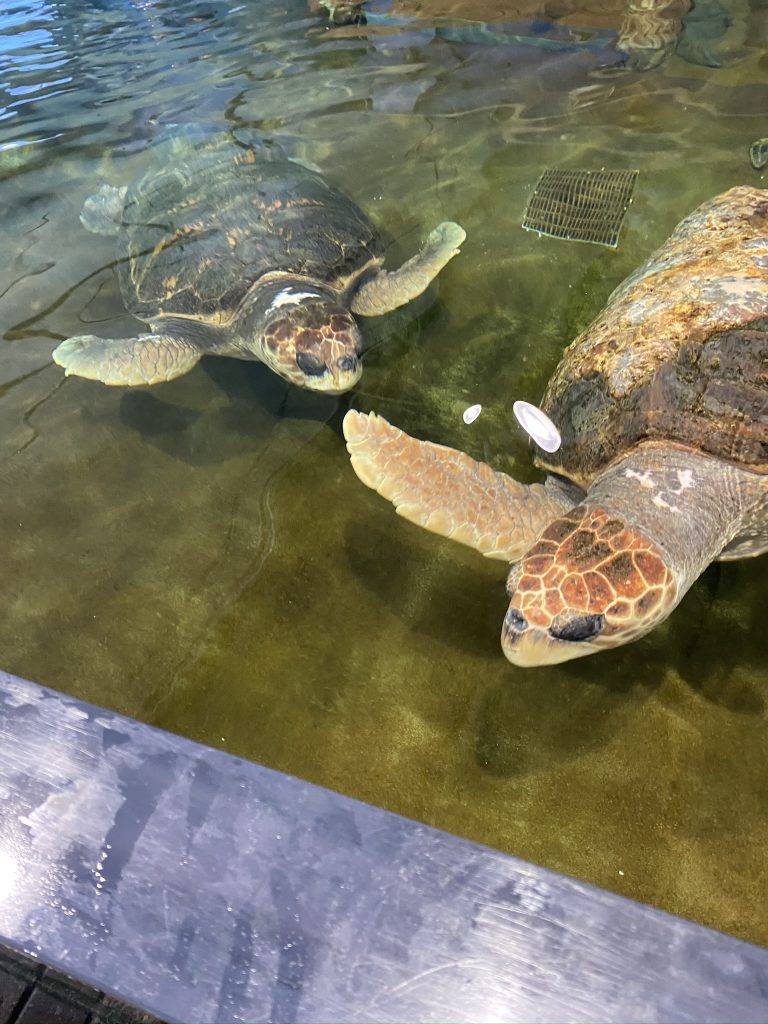
So, here are two of the sea turtles at the Mote Aquarium, and the one on the right took an interest in me. Shortly after I took this picture, she took a swim around the tank, fixed me in her gaze, and swam swiftly back in my direction, at the last moment slapping the water with her right fin. Not only did she achieve a mighty splash, getting me and my phone wet, I’m certain she was laughing heartily in her turtle way at her excellent trick.
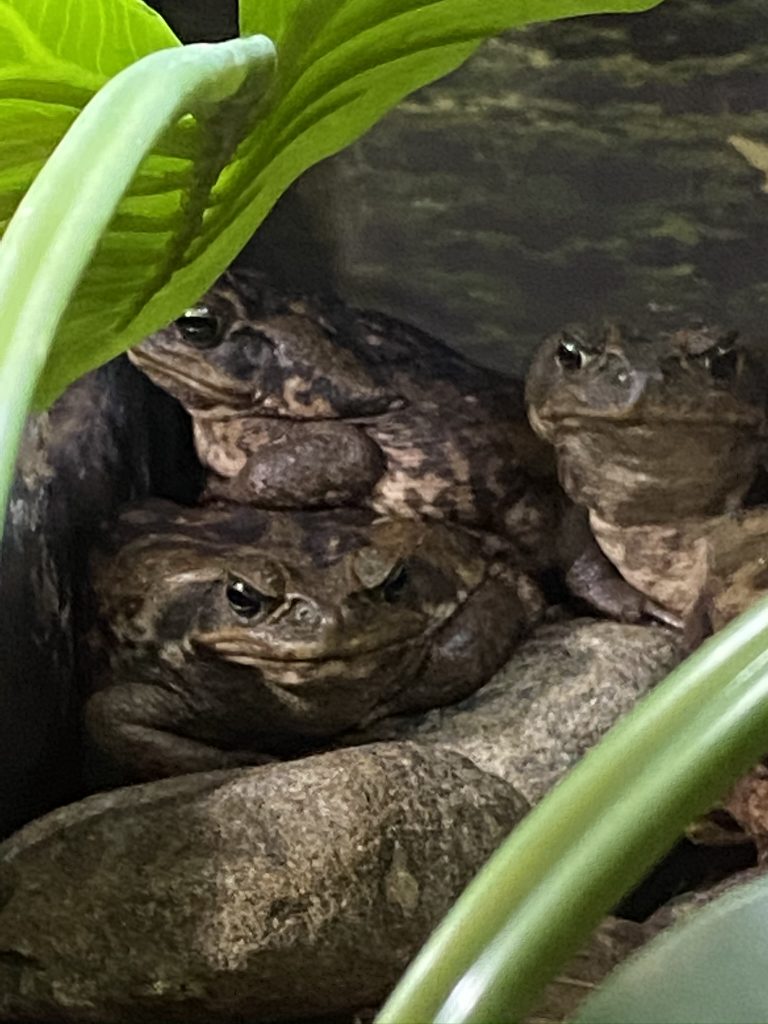
I understand that some people won’t like this picture, but I also have some friends who will love it. These are three Southern toads, who should be distinguished from the cane toad, which is an invasive species in South Florida. These three pals were just hanging out taking it easy when we walked by.
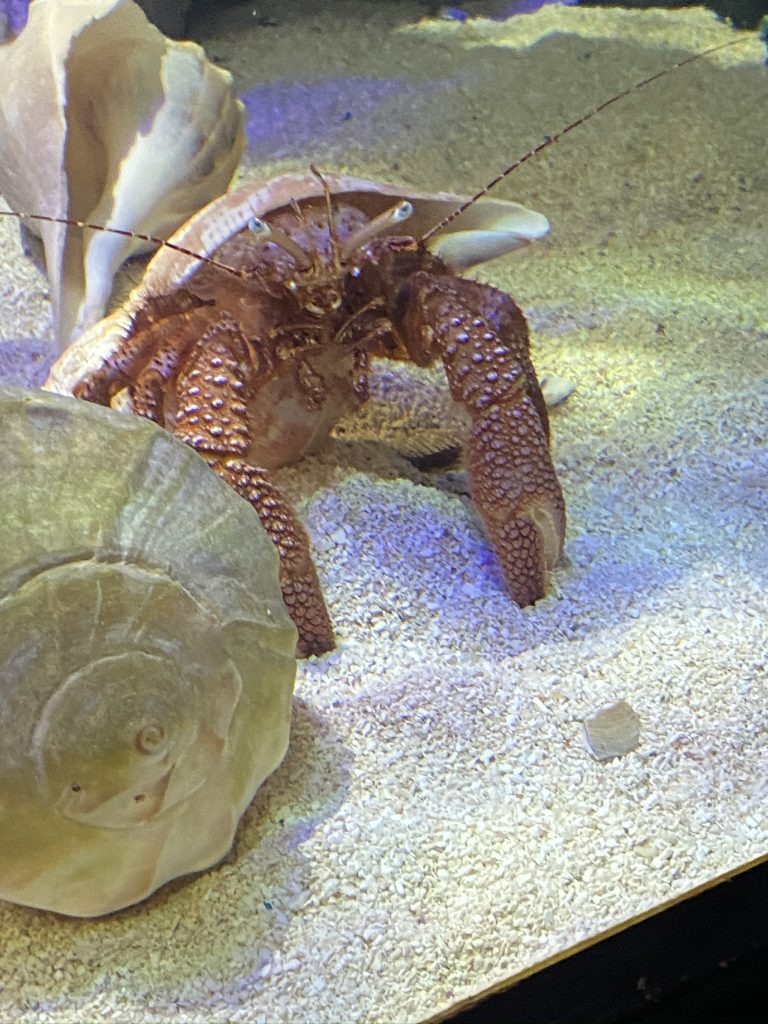
Have you ever seen such a large hermit crab? I haven’t, either, but a note – I’ve seen “adopt a hermit crab” displays in tourist areas recently and a word – just don’t. Leave them on the beach or in a facility like Mote Aquarium. Don’t try to take animals like this home and force them to live in painted shells.
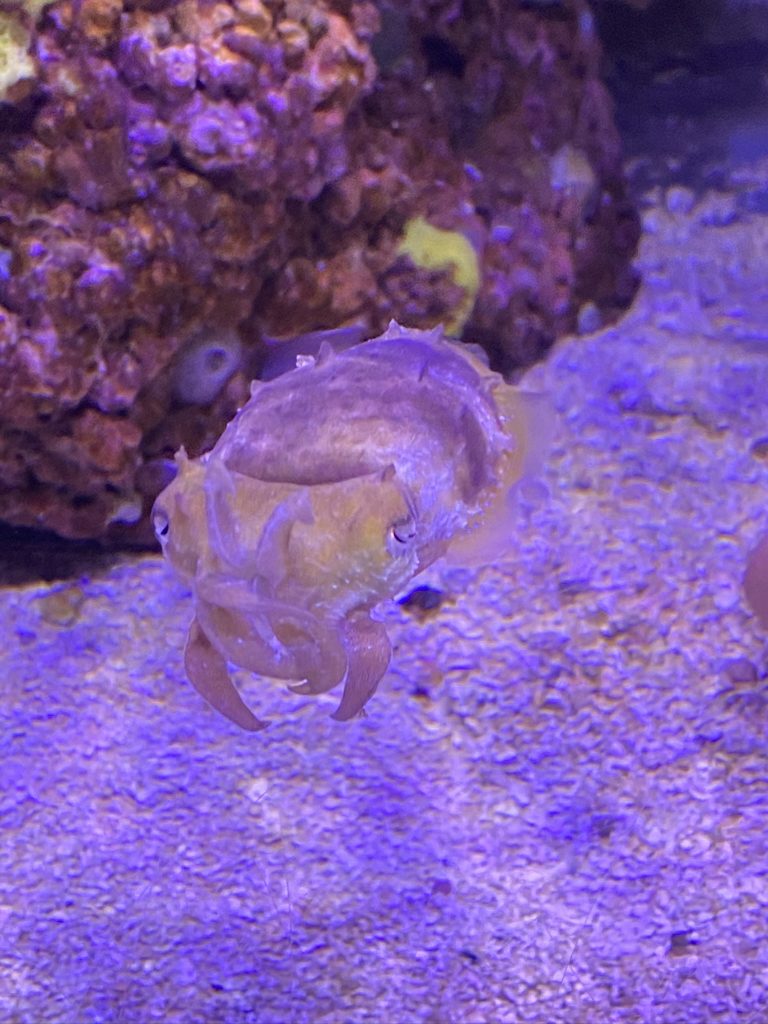
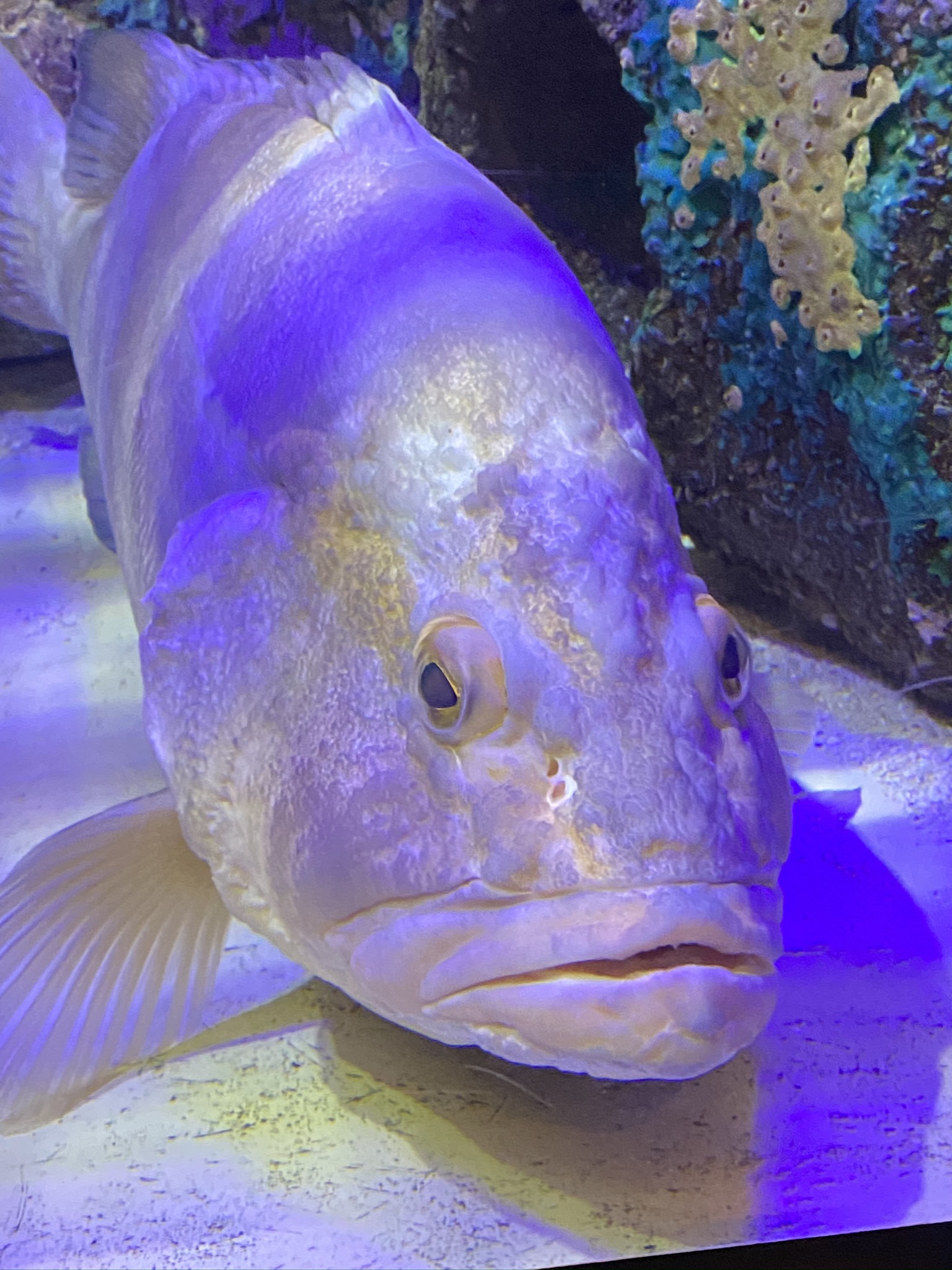
This is a really nice, curious, and friendly cuttlefish. Not only does he share his ability to change his skin color and patterns instantly, he seems as curious about human onlookers as we are about him.
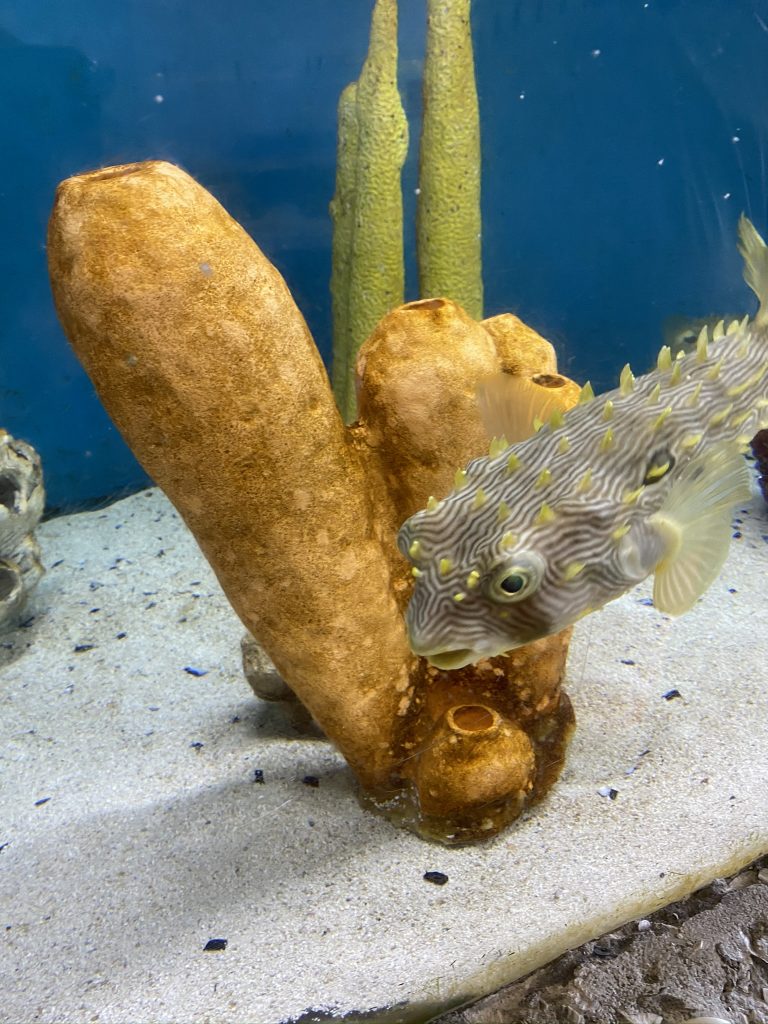
The Mote has a number of active, friendly pufferfish, so here’s a tip. YES, they can be poisonous. Do not touch them if you see them washed up on the beach. I’ve seen several and fortunately, what little common sense I have told me “Don’t touch it,” because they do contain toxins. Pufferfish can be blown ashore during storms and this just a sad fact of life.
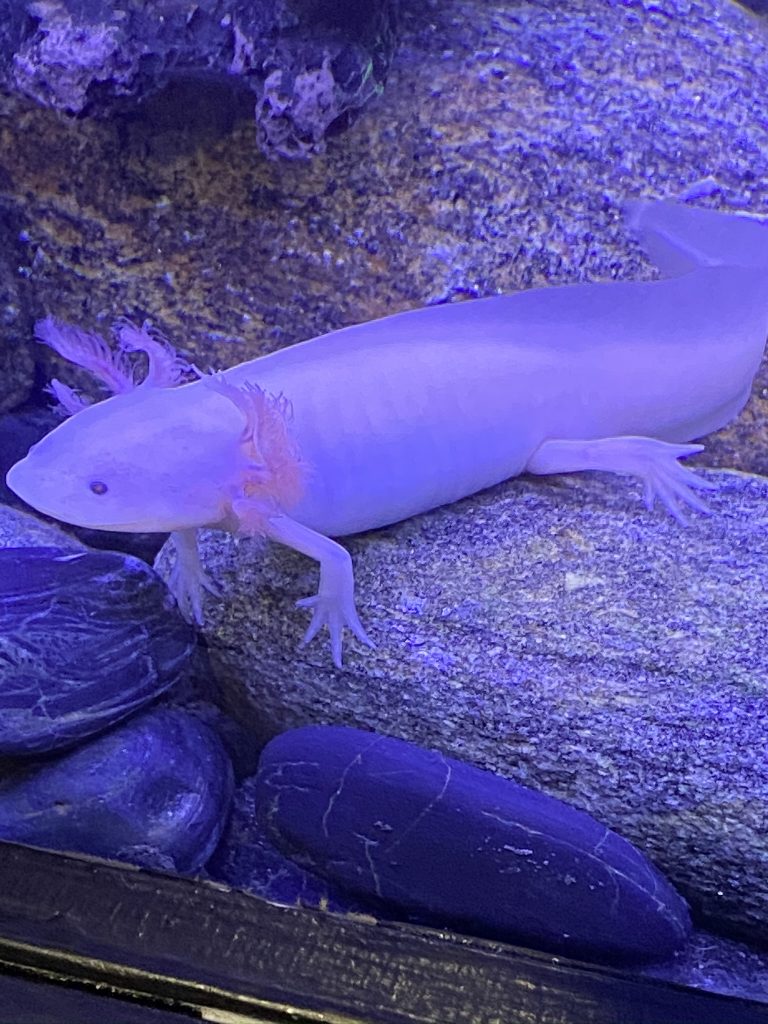
So, of course they also have axolotls at the Mote Aquarium. And this delightful snapping turtle, ready to catch me with the lure inside his mouth.
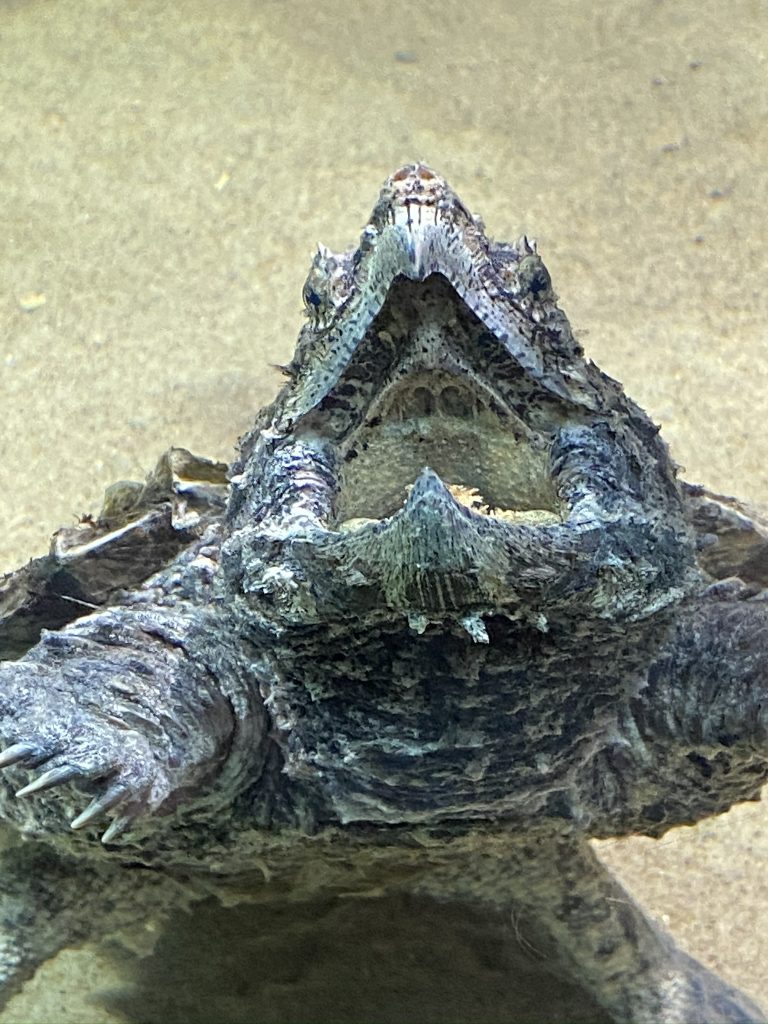
As I was warned as a child, don’t play around with these snapping turtles: they can take your finger off.

I was talking to a native Floridian the other day and told her how sad it was the environment in California had deteriorated so much, even with so many environmental efforts and so much education. She said that Florida had also experienced severe environmental degradation, and that in recent years, things had been improving because people recognized the problems and made changes on their own. So, the beautiful environment that we enjoy so much today is the product of immense efforts on the part of many people. I think institutions like the Mote Aquarium are vital. The Aquarium educates everyone who goes, and they haven’t stopped with the COVID pandemic. They’ve added many virtual programs for all ages. They also have eco tours on the “Mote Boat.”

I’m poor at describing the deep emotion that washes over me when I’m in nature or around a large number of animals that are – for lack of a better word – happy. I know it’s not particularly sophisticated, but I have a measure to judge if a place like Mote Aquarium is “good” or “not so good.”

A couple of years ago when I visited the Monterey Bay Aquarium, they have an exhibit which includes hundreds of sardines swimming in a tank that encircles the viewer at eye level. The environment isn’t constructed to force the fish to confront human visitors, it’s shaped in a way that allows you to stand amid the fish in their normal behavior without disturbing them. Anyway, these hundreds of fish were doing their thing and as I stood there, I felt this overwhelming joy emanating from the hundreds and hundreds of silver, flashing, slender sardines.

I felt similar feelings from nearly all the animals at the Mote Aquarium. The Mote, and a place I’ll write about soon, Theater of the Sea in Islamorada, primarily have animals that cannot survive in the wild. They are teaching, conservation, and education institutions. They do not engage in capturing animals in the wild to force them to perform for paying customers like a sea park I won’t name. They take injured animals, rescued animals, abandoned animals, or orphaned animals and care for them. So, the animals are happy because they are cared for by people who care about them, and because they are living their lives — if not for the Mote, they would probably not survive. They also live in environments that are made as healthy as possible for them, and human visitors are constantly cautioned not to harass, bother, and certainly not harm them.

I was feeling “the feeling” of well-being at the Mote long before I met the saucy, mischievous sea turtle. When she splashed me, I knew she was living in a safe place where she could, as much as possible, be herself. There are many more special turtles that I met at Theater of the Sea — I’ll write more about them soon.
The Way of the Warrior

I’m doing a weekly Zoom in which I discuss principles and other philosophical aspects of Aikido with several other practitioners. One of the topics we keep coming back to is warriorship.

In the news this past week, I read that a U.S. army sergeant has just been become the first woman to become a Green Beret. I cannot help but be thrilled by that. Women can, of course, succeed in programs that are designed for men, even physical ones.

But while I know that Green Berets and other special forces are intended as elite combat troops and therefore expected to have intense physical skills (ones usually associated with very strong men), our Aikido discussions make me think real warriorship has little to do with that level of physical ability.

Common Japanese words for martial arts are budo (the way of war) or bushido (the way of the warrior). But bu, usually said to mean war, can also be translated “to turn the spear,” which means it has a connotation of protection or defense. That opens up a different way of thinking.

As I began to study martial arts, I found myself drawn to the concept of being a warrior, of being the person who would stand her ground, protect others, fight for those who needed me. And, of course, to be a woman able to walk the streets or travel on her own.

That is, to be a woman who was not afraid of men. Continue reading “The Way of the Warrior”

History is Human

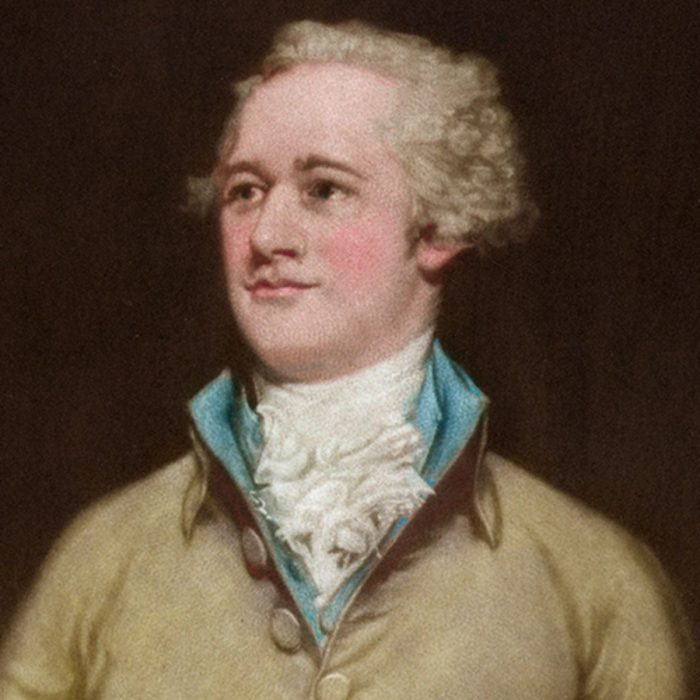
Along with half the known universe, we watched the streaming version of Hamilton last weekend. I think either you love it or have no interest in seeing it at all, but I am very firmly in the former camp. We had seen it last fall with the San Francisco cast, and it was wonderful. Seeing the streaming film with the original cast was, in some ways, even better, because we kept the subtitles on, and lyrics that sped past on my first viewing landed this time, and it was, if anything, more emotionally resonant.

We followed up the next evening with 1776, our annual 4th of July tradition. (The first time I saw it–I must have been in college–I developed a serious crush on Thomas Jefferson: tall, red-haired, wordsmith, plays the violin, looks suspiciously like Ken Howard –no, actually, he didn’t, but never mind that. Subsequent learning took a lot of the gloss off Mr. Jefferson.) I love this show because it captures something important about the origins of my country–it glances off the flaws of the men, but doesn’t skip over the compromises: Here’s John Adams protesting against the removal of a clause condemning slavery:

John Adams: Mark me, Franklin… if we give in on this issue, posterity will never forgive us.

Dr. Benjamin Franklin: That’s probably true, but we won’t hear a thing, we’ll be long gone. Besides, what would posterity think we were? Demi-gods? We’re men, no more no less, trying to get a nation started against greater odds than a more generous God would have allowed.

They’re both right. Posterity–rightly–has not forgiven them. And maybe, likely, without the compromise over the mention of slavery, the south would have walked and the war would have gone the other way.  Continue reading “History is Human”

Friends, brains and other things

Today I have no time but I’m having a long yarn with a friend anyhow. It’s such a bad year and friends matter. This friend sent me an unbirthday present, including a book edited by one friend and with a story by the friend who sent the parcel. Despite the fact that I’m avoiding giving their names to the world (they deserve privacy) the cockles of my heart warmed and I realised we’re all a bit more alone than we intend to be this year.

Oddly, I’m less alone than usual and fitting everything into the week is rather difficult. Part of this is because July is the month no-one goes out in Canberra, which means that single people with chronic illness and a bit of disability can be very isolated indeed. COVID isolation wasn’t as bad as a high pain week for me, for there were friends on Zoom. This doesn’t make my iso full of all the good things – it’s relative. It means that I don’t have to wait two weeks to hear from anyone other than my mother. It means I’m learning how to chat the way other people do, rather than to blurt out everything I’m thinking.

The torrent of words is because I spend so much time alone. What if I don’t see anyone for another two weeks? How will anyone know what’s going on in my life.

This is daft, because I’m active online every single day. My brain doesn’t see that as warm companionship unless someone sends me a parcel. My brain needs educating, obviously. Or more friends need to send me parcels. Maybe both.

I’ve been playing with the thought of what triggers torrents of words in different people and what pushes us into silence. I put it into the novel I just finished (of course I did) and I’m looking today at how culture can silence people. I’ll explore torrents and silence in the same person for a while, because I can and because I am one of those people who moves from extreme to extreme, and I want to know why other people do that when their lives are different to mine.

My days this week are full of administration, writing short pieces (like this and for Patreon) and writing at least 10,000 words of my non-fiction. At 5 pm every night I mysteriously become a Medievalist and attend the big international conference in Leeds. Housework fits in there somewhere and so does cooking and so do a bunch of other things and I’m wondering, “How do other people handle July?”

If you’re in that distant Northern Hemisphere it’s January. I don’t know if January is your bleak and impossible month, though. I know July is the worst month for people in my region. It used to be Canberra, but now it’s the whole region. Getting through July is a feat of my emotional strength. Some years I try to sleep through it.

This year I’m so busy that nearly a week has gone and I didn’t have time to feel threatened by the month.

‘Pfft,’ said my brain’, ‘who needs to fear July when the world is what it is?’

Brain, I love you a great deal, but wouldn’t it be nice to have a good July, for all of us?

Stay safe and well everyone. It’ll annoy my brain if you do, and this is a good thing and devoutly to be wished.

Let’s Make America Smart Again!

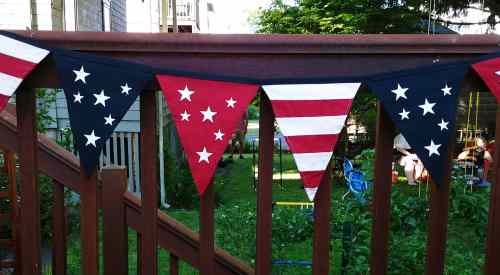
That’s my Independence Day wish for 2020. Let’s restore sanity and civility to our great but struggling nation. Let’s wear masks and beat the virus before it beats us. Let’s root out racism. Let’s treat our friends like friends, and the Earth like it’s our home. Let’s stop cozying up to dictators and destroying families at our borders. Let’s end the national nightmare and Stop Being Stupid.

I wish I could distribute a million hats emblazoned with “Make America Smart Again.” And on the back it would say, “Make America Compassionate Again.”

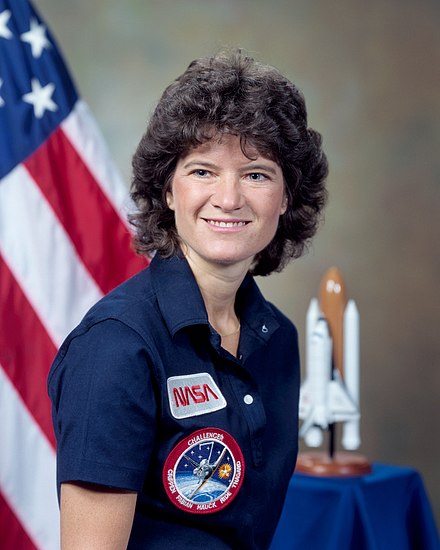
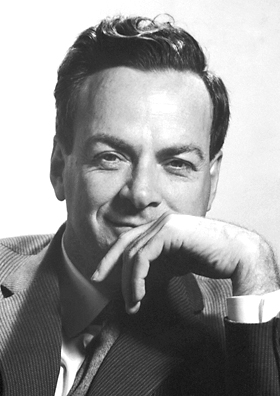
In no particular order, here are just a few smart, compassionate Americans I wish were still with us:

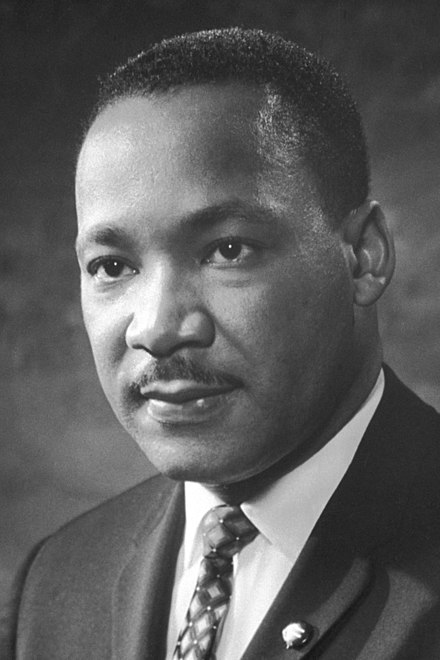
Martin Luther King, Jr.
Rev. Martin Luther King, Jr., activist
Sally Ride
Sally Ride, astronaut
Richard Feynman
Richard Feynman, scientist and thinker

Three Very Different Books

I’m as behind on my reading as I am on everything else, but I have managed to find space for some excellent new fiction. Herewith, my thoughts on three very different books — an anthology of stories based on ancient tales from the Mediterranean, a fantasy that incorporates menopause and life as a college professor, and fast-paced science fiction featuring a very angry and capable construct.

Retellings of the Inland SeasRetellings of the Inland Seas, published by Candlemark and Gleam, achieves something many anthologies aspire to, but few attain: There’s not a bad story in it. That says a lot about the concept — using ancient stories from the Mediterranean as a jumping off point for something new. It says even more about the skill of the editor, Athena Andreadis, who not only came up with the idea, but found the stories.

Fellow Treehouse Writer Judith Tarr’s [ story, “Between the Rivers,” is rooted in the tale of Gilgamesh and Enkidu, but it’s set on a far-off habitable planet and all is created by the genship Ninsun. It’s a wonderful story even without the tie to an ancient one, but knowing something about the original gives you some added depth.

Two of the stories, “Hide and Seek” by Shariann Lewitt and “The Sea of Stars” by Genevieve Williams, come out of The Odyssey. Both are science fiction, Lewitt’s story being told from the point of view of a navigator on a ship traversing the Asteroids, while Williams’s is a first contact story set in the distant past.

My favorite story in this wonderful anthology is “Out of Tauris,” by Alexander Jablokov, which is based on the story of Iphigenia. The Iphigenia of this story is the aged priestess of the Temple of Artemis and accepts sacrifices from men whose wives, who were once girls at that temple, have died. At the end, she observes, “This has always been the greatest torture men inflict on women, to take away choice and then make them pretend that the choice was always theirs.”

But your favorite might be very different. Other authors in this book include Melissa Scott, A. M. Tuomala, James L. Cambias, Christine Lucas, F.J. Doucet, Kelly Jennings, Elena Gomel, Dimitra Nikolaidou, and Andreadis. Read them all and figure out which one you like best.

Continue reading “Three Very Different Books”