
A friend on Facebook pointed to a study that said writing by hand used more of the brain than using a keyboard. As someone who prefers keyboards to writing by hand and has since I learned to type at 16, I was a little skeptical.
I looked up the study and not only found it, but found a significant critique of it published in the same journal.
When I read over the study, I discovered that the participants did the “writing by hand” using a digital pen on a screen, while they did the typing using only their right index finger – that is, the equivalent of “hunt and peck” typing, which is not the way that people generally type on a keyboard. They limited it to right-handed people as well.
According to the study, they did this because using both hands would make it hard to interpret the results. The critique noted the one-finger typing as a problem, as well as looking at other things from the perspective of researchers and finding it wanting.
And I came away deciding they hadn’t really proved anything about the difference between keyboard use and writing by hand.
I suspect there is some value in learning to write by hand – the study points to the understanding of how each letter is constructed, which makes sense to me. But if you want to convince me that it’s better than using a keyboard, you’re going to need to study people using pen on paper and typing with both hands on a keyboard.
I am assuming that most people who spend time using a computer keyboard use it with both hands and know the QWERTY layout in their fingers. If a large number of people are actually doing some form of hunt and peck while staring at the keyboard rather than the screen, the bigger question is why aren’t the kids learning to use a keyboard properly.
I have seen all kinds of arguments about whether kids should still learn cursive. There are those who argue that learning to print is enough. Perhaps it is, but printing was always harder for me than longhand. So I’m inclined to go for teaching all those things – printing, cursive, and typing – and letting people decide which to use when.
Lately teachers have taken to requiring students to write by hand in blue books in class to keep them from using LLMs (“AI”) to write their essays, so they need to be able to print or write longhand. A friend of mine tutors a high school student who is finding the physical act of writing difficult because he wasn’t taught it well when he was younger.
I take notes by hand out of the books I read in my morning reading practice and have noticed a slightly different need for paying attention when writing by hand. But here’s the thing: once I learned to type, I vastly preferred writing on a keyboard where I could see what I was turning out much more easily.
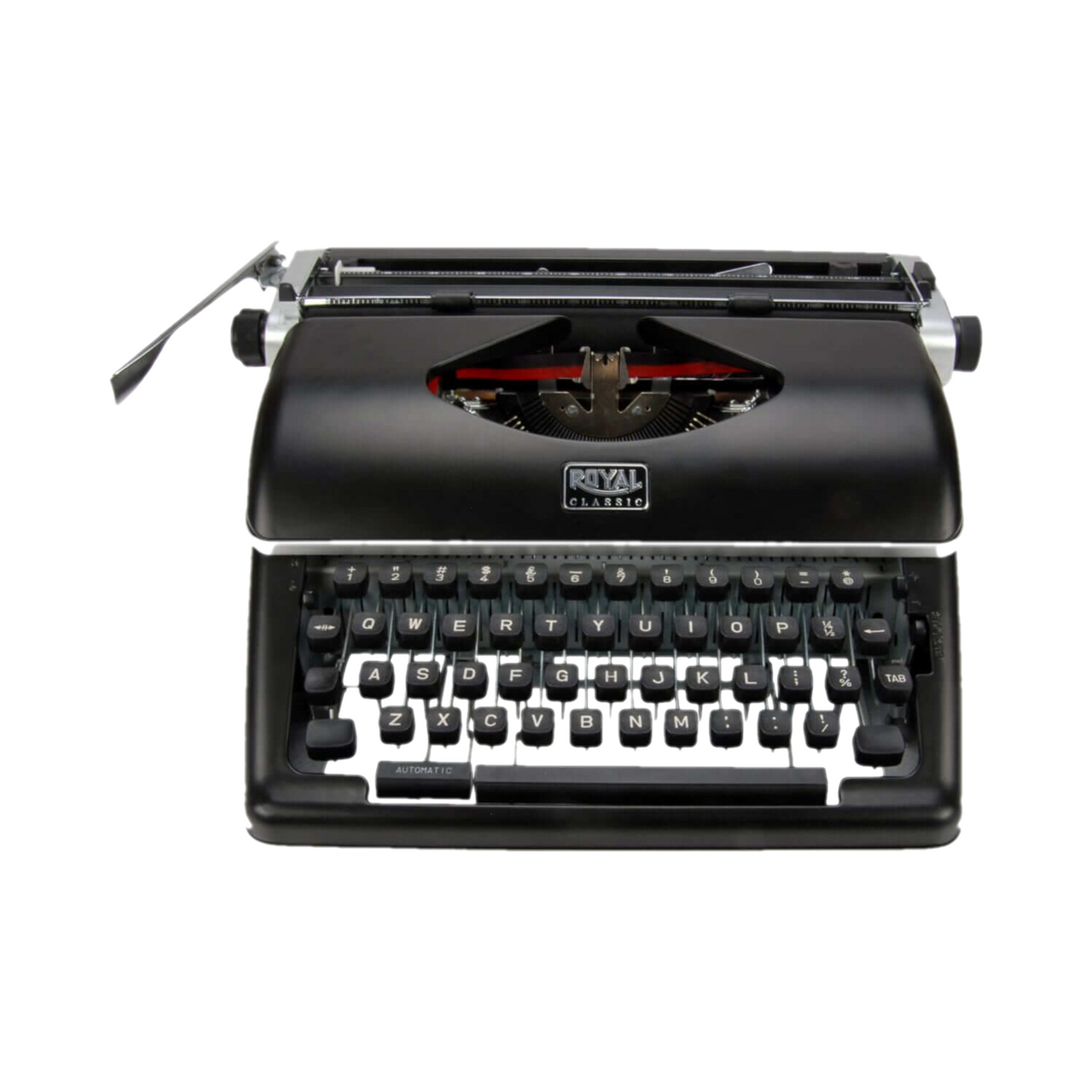 Now mind you, I learned on an actual typewriter back before the personal computer existed. In typing class we used electric IBMs – not the correcting ones that I lusted after as a college student, but still fine machines. At home and for my school assignments, I used an old style manual typewriter, one of the ones that takes effort to punch.
Despite what the research implied, typing is a physical act. Using a keyboard is embodied in my physical self. And while computer keyboards don’t require as much effort as the old fashioned manual machine, the physicality is similar.
I put my fingers on the keyboard, think of what I want to say, and it comes out. I don’t have to think about the individual letters unless I use a word that I’m not sure how to spell.
I like writing this way much more than I like writing by hand, because writing by hand requires more concentration on the physical act of writing – making the letters clear enough, staying within the lines, and so forth.
I pay more attention to the idea when typing, and that’s what I want to pay attention to.
Mind you, I’m not a great typist. I never intended to be a secretary. I use these machines to write, not to reproduce other people’s words.
I think there is something to be said for the physical act, whether by hand or keyboard. Though some people like to dictate. I learned to do that a little when I was practicing law. It’s a different way to write and I don’t think I’d be good at doing it for anything but letters.
But then, I’m not a fan of audiobooks either. I listen to things that I may or may not want to pay attention to. If I want to pay deep attention, I read and even take notes.
It strikes me that different people find different systems useful and rewarding, which is another argument for exposing kids to all of them and letting them do things the way that works best for them.
This is not an argument for using the chatbots, however, because the chatbots are not a tool like writing or typing or even dictating. They’re predictive software designed to produce what seems most likely based on the materials stuffed into them.
If I were an English teacher using writing in class to address the chatbot problem, I’d probably want to let the kids use typewriters. Typewriters aren’t all that available anymore, but given how people are into things like vinyl records these days, maybe they can make a comeback. A quick look online tells me that companies are even making new manual ones.
(For that matter, fountain pens are all the rage, at least among some of the writers I follow on social media. Even though I prefer typing for my actual writing, I confess to lusting after a good fountain pen and a nice notebook.)
Maybe someone looking for a job in this world where the “smart” money is all invested in so-called AI would do well to start a typewriter sales and repair shop.
If analog is back, let’s have it with all the trimmings, with local shops and tools that work. And maybe not worry so much about the slightly different ways our brains work with all these devices.
In his novel The Cave, Jose Saramago writes of a potter who muses that there is a brain in the fingers. As I recall, his idea is that the fingers start working and the brain catches up. That might be why some people freewrite by hand just to see what comes up.
No reason why we can’t write by hand and by keyboard, depending on the situation.
I agree with you that students would be better off learning printing, cursive, and keyboard techniques so they can choose how they want to write.
I should read that Saramago, because that makes sense to me. We think with our whole bodies.
I suspect that our conscious mind doesn’t always know the stuff we know. I discover this all the time when I give talks, or teach and have to stop for a moment to pay attention to what I just said.
That’s the sort of thing I’ve figured out from years of training in martial arts. My body knows a lot of stuff and every once in awhile I have to try to put it into words.
When I’m writing (which is to say, composing) I generally prefer to use a keyboard, which is (for me) faster. But if I want to remember something, I write it out by hand (I cannot imagine being in a class and keyboarding, or worse, taping, a lecture). There is something (again, for me) about forming the words–usually using cursive, tho in college my notes were all printed in tiny, squared-off letters–that made the information stick better.
I’ve been working with kindergarteners, and one of the things we work with is fine muscle coordination, as a precursor to writing. Some kids have a gift for it; others have to work harder. But I think it’s good that they work on it, because I don’t think writing by hand is going away.
The only time I’ve used a keyboard to take notes was when I was covering legal conferences. Since I type faster than I write by hand, I could sometimes get direct quotes down, and then I would use the same file to write my story about the conference. It made it easier to do the story and — to be truthful — I rarely cared about remembering anything that got said for longer than to write the story, especially if I was covering a tax conference.
As for recording stuff: that would just mean you’d have to listen to it all again. That is only useful if you’re a reporter doing radio or need to make sure you get exact quotes.
I’m glad the kids are working on fine motor skills. That can only help them later on. While I had no trouble learning how letters were made, mine were never neat enough for any teachers. Nor has my cursive improved over the years. But my own idiosyncratic handwriting works for me.
The old fashioned stress on the aesthetics of handwriting is… stupid. I admire beautiful handwriting. During that awful period of teen-hood when I had minus 0 self-esteem, I worked on my handwriting (I liked my voice, and improved my handwriting, on the weird teenage theory that if I could just interact with the world at second hand, through writing and disembodied voice, I would not offend anyone). But anyone who has ever done primary source research using documents that are 100 years old, or even less, can tell you: beautiful handwriting was not always legible.
Handwriting is a life skill, but it should be about communicating, first to yourself, then to the outside world. I sometimes encounter a belief that keyboarding is all a kid needs in this modern world… Nope. Someday your battery may run out, your device may break, you may be somewhere without access to a tablet or computer or phone.
Exactly. I recall so much pressure about beautiful handwriting, but I also recall never having any real trouble figuring out how to make letters correctly. The latter seems more important.
I mean, I also took a calligraphy class once, though I recall the teacher being very condescending to me. I have no natural talent for such things and it has taken me most of my life to figure out that teachers who only know how to teach people with talent aren’t the best teachers.
Most excellent information about that study. I mean…that’s not really writing (given how much effort has gone into replicating the feel of “writing on paper” when it comes to various devices) and that’s not really typing. So what the heck was the point?
I like the experience of writing, but I get hand cramps if I do it extensively. I love the feel of fountain pens. And I love the sound of typing on a mechanical keyboard and what it feels like when your fingers are flying through first draft. Different situations, different uses. I like the idea that kids should be taught All the Things, so they, too, can understand what works for them under what circumstances.
I get hand cramps, too, sometimes even when typing. Yeah, different situations, different uses makes so much sense.
Maybe we need to start a campaign for teaching kids all the skills, with the understanding that they get to do things the way that works best for them.
I learned to touch type in high school. Annoying to learn, but I’m so glad I did.
Reading this, I wondered how many people today learn touch typing. Various articles indicate that 20 to 25% of people can touch type. Another article describes the lack of touch typing skills with Gen Z. A quote: “The report cited data from the US Department of Education, showing that in 2000, a staggering 44 percent of high school graduates took a keyboarding course. By 2019, that number had plummeted to just 2.5 percent. One might assume this is because Gen Z is so adept at typing that formal instruction seems unnecessary. Unfortunately, the reality is quite the opposite.”
References for anyone who cares:
https://www.techspot.com/news/104623-think-gen-z-good-typing-think-again.html
https://thefactbase.com/only-25-of-people-can-type-well-without-looking-at-their-keyboard/
I didn’t enjoy typing class either — and, as with handwriting, didn’t do all that well. I seem to recall I barely made a B in it at a time when I was mostly making As in everything.
I am appalled that we’ve got the combination of having everyone do everything online, which requires typing, and yet people aren’t learning to type effectively. And we’re not teaching cursive and maybe not even teaching printing well. Now I wonder how much of the inability to type and/or write by hand well is leading people to think they need chatbots. If you can’t easily use a keyboard or pen, it must be a lot harder to write around a subject until you figure out what it is you’re trying to say.
My mother was a ferociously fast and accurate typist: 104 wpm on a standard non-electric typewriter. Because of this she kept getting raises to keep typing (she wanted to move into editorial, like her best friend, who finished her career as an executive editor at Bantam Books). So when she taught me to touch type, Mom sent very mixed messages: learn to type, but don’t let them know you can type well. As a compromise I learned to touch type with wild inaccuracy–I have the fastest backspace action in six counties. But it’s another skill I’m glad I have.
My daughters both type fast–I think it’s a form of touch-typing, but not the way Mom taught it. I wonder if the people who take typing classes now are simply folks hoping to do coding.
I didn’t have to work at it to be error-prone. I wanted a correcting Selectric for years, but then the PC came along and solved that problem. I’ve got no idea how fast I type with or without errors, but given that I cannot retype something without changing it, I would be a lousy secretary.
I do sometimes wish I’d taken shorthand, though. Very useful for covering events.
Thanks, everyone — enlightening! I use both writing methods for different purposes, like most everyone here. As for muscle memory, I’ve noticed that sometimes, when I sit at the piano and my fingers remember and start playing a piece that I’m not consciously remembering or directing. The world is a wonderful and mysterious place!
It’s been many years since I played piano, but I think it’s just possible that if I put my hands in the right place, I could still play some of the “Dance of the Sugar Plum Fairy.” And I keep lusting after bass clarinets on the assumption that my body still knows how to play one.