
Staying Safe

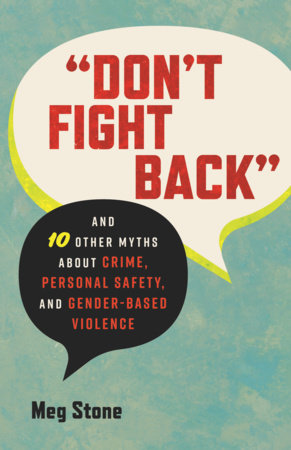
cover of Don't Fight Back, a book by Meg StoneI walk a lot for exercise, and on those days when I don’t get around to it in the daytime – not to mention those days when it’s hot – I often go for a neighborhood walk around 10 pm. I live just off Telegraph Avenue in Oakland, California.

I also either walk or take public transit when I go out at night to see a movie or meet someone for dinner or go to an event in San Francisco. I don’t like to drive to social events because I hate traffic, really hate to park, and also  might want to have a drink. I do this regardless of whether I’m going with someone or by myself.

I am a little nervous about one thing when I’m out at night, though.

Cars.

Not to sound all old and “get off my lawnish,” but I swear drivers have stopped paying attention to stop signs and even traffic lights. And some of them speed down residential streets. They completely ignore crosswalks, despite the fact that if you take the California written drivers exam at least three of the 20 questions will be about when you’re supposed to yield to pedestrians (all the time).

I’m scared of getting hit by cars. In the winter, when it gets dark early and lots of cars are still on the street, I try to remember my flashlight. And not only do drivers seem more careless than they used to be, but the cars are so damned big.

What I’m not scared of are other human beings on foot.

Unfortunately, other women are. And there are a lot of articles and social media posts and even purported self-defense classes that are aimed at making sure women stay scared.

I always try to debunk the post I see regularly on social media – the one about carrying your keys so that they’re between your fingers (which is only useful if you actually know how to throw a punch) and not going places alone and carrying pepper spray. I work at doing it gently, because people share it in good faith.

They’re scared. The trouble is, they’re mostly scared of the wrong things.

I look up the latest stats, remind people that the biggest risk of sexual assault against women is by people they know – acquaintances, exes, current partners, even family – not strangers. (Murder even more so.) I point out how to pay attention, suggest good self defense classes.

Now, though, I’m just going to tell everyone to read Meg Stone’s new book: Don’t Fight Back and 10 Other Myths About Crime, Personal Safety, and Gender-Based Violence. She’s covered everything I want to say and provided the reader with detailed facts, studies, and statistics to back it up. Continue reading “Staying Safe”

The Cost of Fear: A Great Book on Self-Defense

Every fall, when it starts to get dark earlier, we see a deluge of messages on social media aimed at telling women how to stay safe (and yelling at men because they don’t have to pay attention to such things). These messages – which include things like holding your keys in your hands and not going out alone at night – are usually well-meant and mostly wrong.

There are also ongoing debates about how to deal with violence against women in our society, with many people arguing that the focus should be on those who commit the violence. These people think it’s unfair to encourage women to learn self-defense, since they’re not the cause of the problem, and advocate for programs aimed at perpetrators.

Unfortunately, even improved laws and law enforcement around sexual assault and rape – and such improvements are scant – don’t help when someone’s being hurt, and the training programs aimed at stopping men from harming have been unsuccessful.

What has been most successful, as Meg Stone points out in her excellent and thorough new book The Cost of Fear: Why Most Safety Advice Is Sexist and How We Can Stop Gender-Based Violence, is the approach taught as empowerment self-defense, a feminist-based system that includes both training in effective physical techniques and a number of other skills such as boundary-setting that can prevent a difficult situation from getting out of hand.

Stone is the executive director of IMPACT Boston, one of a number of groups worldwide teaching effective self defense as more than just fighting back. She’s also worked in the area of preventing gender-based violence for over thirty years and, as this books illustrates, she is very skilled at presenting the issues in a way that changes the response without provoking more of a fight – a very useful self-defense skill.

As Stone points out in detail in the book, linking to studies, unlike the short programs aimed at convincing, say, male college students not to attack women, empowerment self defense classes such as those taught by  IMPACT and similar programs have been shown to reduce the number of assaults and to otherwise give women the power to make their position safer.

As Denise Velasco, a participant in a program teaching self defense to janitorial workers at risk of assault, told Stone:

I came to a point where I understood that self-defense wasn’t just about defending  yourself; it was about changing the way you looked at the world in terms of your own power.

Continue reading The Cost of Fear: A Great Book on Self-Defense”